
The best back door for most homes is a half-glazed UPVC or composite door with a multipoint lock and an anti-snap cylinder: glass in the top half brightens the kitchen, a solid lower panel shrugs off boots, bags and paws, and proper locking matters more here than anywhere because the door is hidden from the street. Aluminium is the better fit if your rear elevation is contemporary or already has aluminium windows. We survey, supply and fit made-to-measure back doors from our workshop at Fifield, near Windsor, across Berkshire, Buckinghamshire, Surrey, west Kent and north West Sussex.
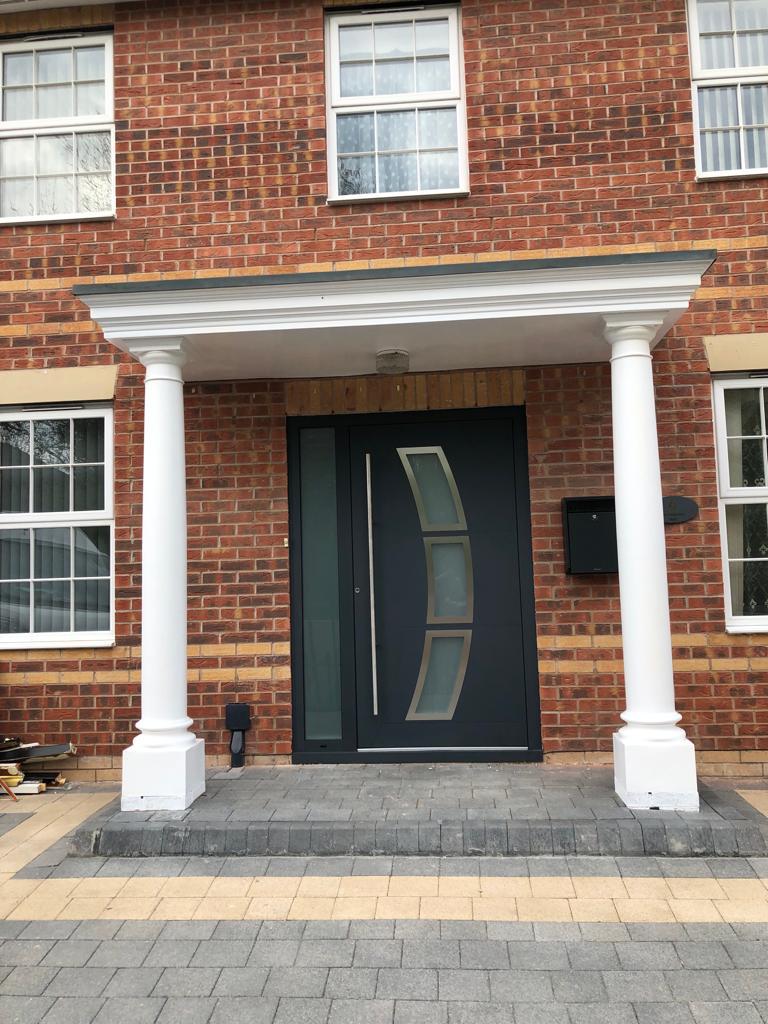
This page is about the everyday rear door into a kitchen, utility room or side passage. For the full range of exterior doors, including front, French and patio doors, start with our external doors guide.
Why a back door needs different thinking
A front door is chosen for looks. A back door earns its keep through use: it is opened dozens of times a day for the bins, the washing line, the dog and the children, often with full hands. It usually sits behind a side gate or garden fence, screened from neighbours, which gives anyone trying it time and cover. So the priorities shift: durability, a lock that is easy to engage every time, light for the kitchen, and a threshold that copes with whatever is tracked in from the garden.
“Professional service, good communication and attention to detail throughout the job. The finished work looks fantastic and was exactly what I needed.”
“Everything from the sales to the installation was a perfect experience. We love our sliding doors and windows.”
“Excellent work done in installing the new door. Price was very competitive. Would highly recommend.”
Half-glazed, fully glazed or solid?
- Half-glazed: the classic kitchen door. Glass above the mid-rail gives a view of the garden and lets daylight reach the worktop, while the solid bottom panel takes knocks and hides the clutter of shoes and mats.
- Fully glazed: the most light, and a good choice where the back door is the only rear opening in a dark kitchen. Think about privacy: obscure or textured glass avoids a neighbour looking straight into the room.
- Solid: best for utility rooms, boot rooms and doors into a garage or side lobby, where security and insulation matter more than daylight.
- Glazed with a small vision panel: a useful middle ground on side-passage doors, letting you check who is there without exposing the whole room.
Whichever you choose, glass in a door that is wholly or partly within 1,500mm of the floor must be safety glass, as must glazing within 300mm of the door edge in an adjacent side panel, according to building control guidance on safety glazing. We specify this as standard.
Which material suits a back door?
UPVC back doors
UPVC is the economical, low-fuss option and the natural partner for UPVC windows on the same elevation, because colours and frame profiles can be kept consistent. It is easy to clean, which counts on a door that gets splashed and handled constantly. See our UPVC windows and doors page for colours and finishes.
Composite back doors
A composite slab is thicker and more rigid than a UPVC panel, so it feels more solid in daily use and resists kicks to the lower half well. It is the usual pick for cottage-style rear doors and for anyone who wants a timber look without repainting. Our composite doors page covers the styles.
Aluminium back doors
Aluminium suits contemporary kitchens, slim sightlines and large glazed panels, and can be powder coated to match aluminium windows we fabricate in our own workshop. If you are tempted to make the opening wider, look at French doors or patio doors instead, which are designed for that job.
Security for a door that is out of sight
Because nobody sees the back door from the road, it should be at least as secure as the front. The essentials:
- a complete doorset (door, frame and hardware) tested to PAS 24, rather than a door leaf alone;
- an anti-snap euro cylinder and a multipoint lock that throws hooks or bolts along the locking edge when you lift the handle and turn the key;
- laminated glass on the lower or more exposed pane, which police advice recommends for vulnerable doors (West Yorkshire Police door and window advice);
- no key left in the inside of the lock, and no letterplate, which a back door rarely needs.
Our door security guide explains the standards and cylinder ratings in detail.
Pet flaps in back doors
Most people want a cat or dog flap in the back door, and it is far better to plan it at order stage than to cut one later. There are two routes:
- In the lower panel: a flap set into the solid bottom panel of a UPVC or composite door. Ask us before ordering, because cutting the panel can mean the door no longer matches its tested, certified design.
- In the glass: toughened glass cannot be cut once made, so the sealed unit has to be manufactured with the hole already in it (as glaziers explain here). This suits fully glazed doors and keeps the flap at a sensible height for small dogs and cats.
Choose a microchip-reading or lockable flap, and keep the size to what your pet needs: police advice warns that large flaps weaken a door and can let a person climb or reach through.
Utility rooms, side passages and awkward openings
Rear doors are often non-standard. Older houses frequently have narrow utility doors, doors set into a side return barely wider than the frame, or openings that have been altered during an extension. Because every door we fit is made to measure, odd sizes are not a problem, but a few practical points come up at survey:
- Opening direction: an inward-opening door keeps a narrow passage clear; check it will not hit a worktop, radiator or tall unit when fully open.
- Threshold height: a low threshold is easier for bikes, buggies and wheelchairs, but needs good drainage and a patio that falls away from the door.
- Weather exposure: a door facing the prevailing wind with no canopy works its seals hard. A small canopy or porch roof helps; see our porches page.
- Hinge side: hang the door so it opens towards the route you actually walk, such as the bins or the garden path.
Energy and Building Regulations
A replacement external door in an existing home in England should reach a U-value of 1.4 W/m²K or an equivalent doorset energy rating, under Approved Document L, according to the British Woodworking Federation summary. An old single-glazed or poorly sealed back door can be a real source of draughts in a kitchen, so the improvement is usually noticeable straight away.
Common mistakes with back doors
- Buying the cheapest door because “nobody sees it”, when it is the door most exposed to a break-in attempt.
- Clear glass that looks straight into a neighbour’s garden, or theirs into your kitchen.
- Adding a pet flap after fitting and invalidating the glass or panel.
- Ignoring a patio that slopes towards the threshold, which sends rainwater at the door bottom.
- Leaving the key in the lock, a habit worth breaking whatever door you choose.
Looking after a back door
Wipe frames and glass with mild soapy water, clear the drainage slots in the threshold, and put a drop of light oil on the multipoint mechanism and hinges once or twice a year. If the handle becomes stiff to lift, that usually means the door needs a small adjustment rather than force; call us and we will sort it.
Book a free back door survey
We will measure your opening, bring glass and colour samples, and talk through locks and pet flaps on the spot. Doors are made to measure with lead times from 10 days and come with our 10-year guarantee. Call 01753 965 005 or request a quote online.
Frequently asked questions
What is the best type of back door for a kitchen?
For most kitchens a half-glazed UPVC or composite door works best. The glazed top half lets daylight in and gives a view of the garden, while the solid lower panel copes with kicks, shoes and pets. Choose aluminium instead if your rear elevation is contemporary or already has aluminium windows.
Should a back door be as secure as a front door?
Yes, arguably more so, because a back door is usually hidden behind a fence or gate where nobody can see someone trying it. Look for a complete doorset tested to PAS 24, a multipoint lock, an anti-snap cylinder and laminated glass on vulnerable panes, and never leave the key in the lock.
Can you fit a cat flap in a new UPVC or composite back door?
Usually, but plan it before the door is ordered. A flap can go in the solid lower panel, although cutting it may mean the door no longer matches its certified design, or in a glazed panel, where the glass unit must be made with the hole already in it because toughened glass cannot be cut afterwards.
Does a glazed back door need safety glass?
Yes. Building control guidance says glass in a door that is wholly or partly within 1,500mm of floor level must be safety glass, and so must glazing within 300mm of the door edge in a side panel. We specify toughened or laminated safety glass as standard on every door we supply.
Can you make a back door for a narrow or non-standard opening?
Yes. Every door we supply is made to measure, so narrow utility doors, side-return doors and openings altered by an extension are not a problem. At survey we also check the opening direction, threshold height and drainage so the door works well day to day, not just on fitting day.