
Anthracite grey, RAL 7016, is one of the most popular front door colours today: dark enough to look smart and modern, softer than black, and easy to match with grey windows, garage doors and roofline. Other popular shades include the darker RAL 7021 Black grey, the warmer RAL 7039 Quartz grey and the much lighter RAL 7038 Agate grey. The key to a good result is choosing the right shade for your brick or render and matching it accurately to everything else on the front of the house. We supply and fit grey composite, aluminium and UPVC front doors across Berkshire, Buckinghamshire, Surrey, west Kent and north West Sussex.
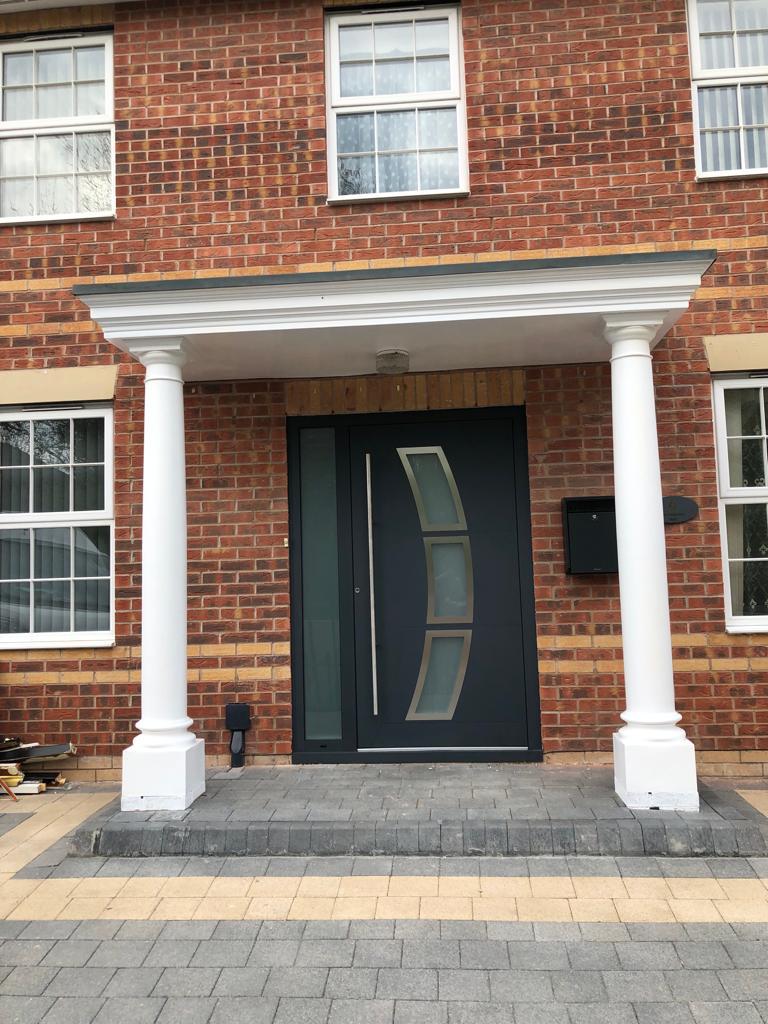
Our main front doors guide compares materials and styles. This page is about getting grey right.
Why grey is so popular
Grey is neutral without being bland. It flatters red brick, buff brick, render and cladding, hides everyday dirt better than white or black, and suits both new-build estates and remodelled older homes. It also gives a cohesive look when windows, door, garage door and fascias are all in the same shade.
“Professional service, good communication and attention to detail throughout the job. The finished work looks fantastic and was exactly what I needed.”
“Everything from the sales to the installation was a perfect experience. We love our sliding doors and windows.”
“Excellent work done in installing the new door. Price was very competitive. Would highly recommend.”
The main shades
- Anthracite grey (RAL 7016): a deep blue-grey charcoal. The go-to shade for contemporary homes and a common match for grey aluminium and UPVC windows.
- Black grey (RAL 7021): almost black, with a softer edge. Good where you want drama without the starkness of jet black.
- Quartz grey (RAL 7039): a warmer, slightly brown-toned mid-dark grey that sits well with stone, buff brick and timber.
- Agate grey (RAL 7038): a pale grey that works on cottages and lighter render, often paired with a darker door colour or used on windows around a deeper door.
On aluminium we can powder coat to the RAL shade you choose. Composite and UPVC doors come in set colour ranges, so ask us and we’ll confirm which greys are available for the door style and sizes you want.
Matching a grey door to your windows
This is where grey doors go wrong most often. “Anthracite” on one product is not always identical to “anthracite” on another, and a powder-coated aluminium frame, a foiled UPVC frame and a painted composite skin can each look slightly different in sheen and texture even in the same RAL colour.
- Replacing windows and door together: the simplest way to a perfect match. Aluminium windows and an aluminium door can be coated in the same colour in our own workshop. See our grey and black windows page.
- Matching existing grey windows: find out the RAL code or foil name from your paperwork if you can, and compare samples next to the windows in daylight, not indoors.
- Different materials on one elevation: accept a small variation in texture, or deliberately choose a contrasting shade for the door so the difference looks intentional.
Choosing a shade for brick and render
- Red brick: anthracite gives a crisp modern contrast. Quartz grey is softer and warmer.
- Buff or yellow brick: anthracite and black grey look sharp; very light greys can look washed out.
- White render: anthracite is the classic choice; consider matching grey windows for a clean, architectural look.
- Grey or coloured render: go a few shades darker than the render so the door does not disappear.
- Period brick and flint: a mid-dark grey with a woodgrain texture is gentler than a smooth modern finish.
Does grey suit a period house?
It can, with care. Grey is not a historic colour in the way deep greens or blacks are, but a dark grey on a traditional panelled door can look refined on an Edwardian or 1930s house. Keep the hardware traditional and the panel layout correct; our period doors guide explains how. In a conservation area, check with your council before a strong colour change.
Finishes and hardware
Smooth finishes give a crisp, modern feel; woodgrain textures soften grey and suit cottages. For hardware, chrome and satin stainless are the natural partners for anthracite; black handles give a monochrome look; and brass adds unexpected warmth to a mid or dark grey. See our door handles guide. If you are torn between grey and black, our black front doors page compares the look.
Carrying grey across the house
Grey looks most considered when it is repeated. Think about:
- a matching garage door;
- grey fascias, soffits and guttering;
- a porch or canopy in the same frame colour;
- side panels and toplights coated to match the door frame.
You do not need everything in one shade; a lighter grey for windows with a darker grey door is a deliberate, attractive combination.
Sun and dark greys
Anthracite and black grey are dark colours, so they absorb more sunlight than white and get hotter, which can make materials expand, as Glass Times explains in its testing of coloured profiles. On a south or west-facing door in full sun, it is worth discussing material choice and heat-reflective finishes with us. Lighter greys are less affected.
Inside colour
Many doors can be ordered grey outside and white inside, keeping the hallway light. Specify it at order stage.
Common mistakes
- Choosing a door grey from a screen or brochure instead of a physical sample outdoors.
- A door that is almost, but not quite, the same grey as the windows.
- A light grey door against light render, so the entrance disappears.
- Forgetting the garage door, which then looks out of place.
Care
Wipe a grey door down with mild soapy water every few weeks and rinse. Mid and dark greys hide marks well, but rinse away bird droppings and tree sap promptly. Avoid solvents and abrasive pads.
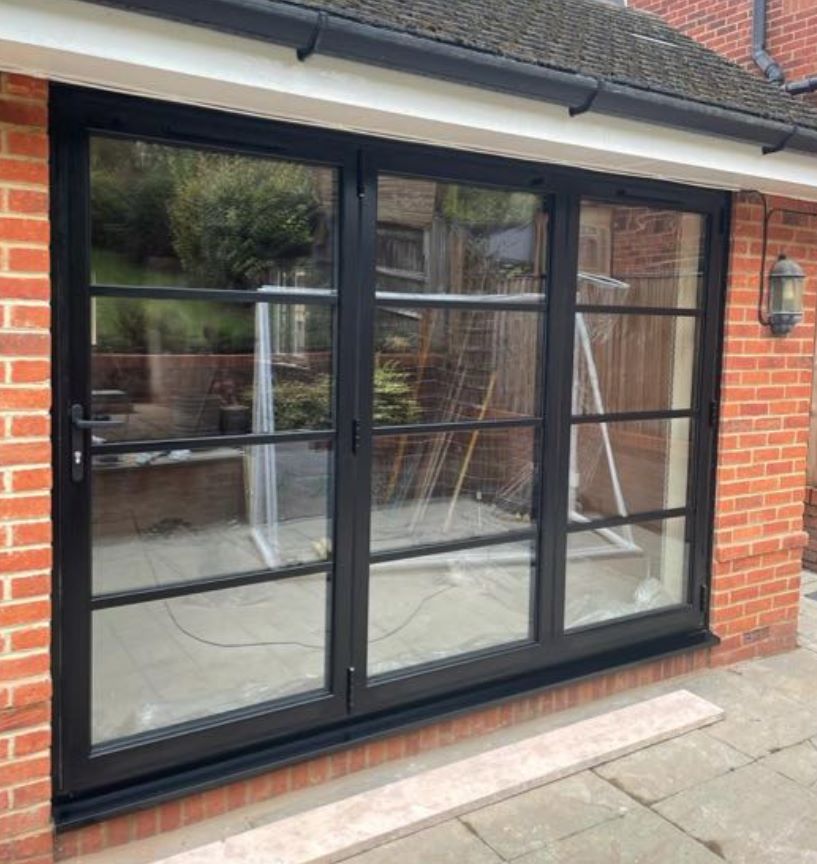
See grey samples at a free survey
We bring grey samples to hold against your brick, render and windows. All doors carry our 10-year guarantee, with lead times from 10 days. Call 01753 965 005 or request a quote online.
Frequently asked questions
What colour is anthracite grey?
Anthracite grey, RAL 7016, is a deep charcoal grey with a slight blue tone. It is a hugely popular grey for front doors and windows because it looks modern and smart, hides dirt well and works with red brick, buff brick and render. It is noticeably softer than black, especially in bright daylight.
Will my grey front door match my grey windows?
It can, but check carefully. Even in the same RAL colour, powder-coated aluminium, foiled UPVC and composite skins can differ slightly in sheen and texture. Replacing windows and door together gives the best match. Otherwise find your window colour code and compare physical samples next to the windows outdoors.
Which grey front door goes with red brick?
Anthracite grey gives a crisp modern contrast with red brick and is a very popular choice. Quartz grey is a warmer, softer alternative that suits older or more rustic brick. Very light greys can look washed out against red brick, so most people go for a mid to dark shade.
Is anthracite grey or black better for a front door?
Anthracite grey is softer and more forgiving, matches grey windows easily and hides dust better. Black is more formal and dramatic and suits period homes particularly well. Both are dark colours that get warm in strong sun. Compare samples of both against your brickwork in daylight before choosing.
Can I get a grey front door with a white inside?
Usually, yes. Many doors can be ordered with a grey exterior and a white or other colour inside, which keeps the hallway light and matches internal woodwork. It must be specified when the door is ordered, so mention it at survey and we will confirm the options for your chosen door.