
A good period front door copies the proportions of the original, not just the general idea: the right number of panels, the right mouldings, glass where the original builders put it, and hardware fixed at the correct heights. For a Victorian house that usually means a four-panel door, often with the top two panels glazed; for an Edwardian house, a lighter design with a large glazed upper section and decorative, stained-glass-effect leading. We supply and fit period-style composite and UPVC front doors with woodgrain finishes, decorative glass and traditional furniture for homes across Berkshire, Buckinghamshire, Surrey, west Kent and north West Sussex.
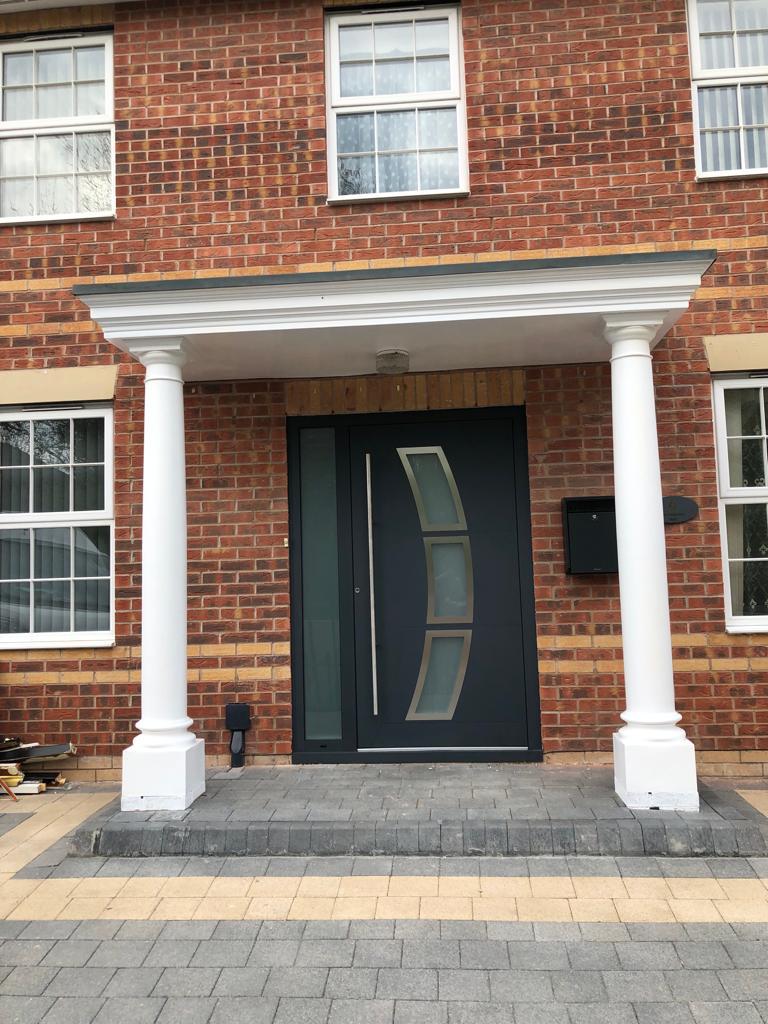
This page goes deeper into period styles than our main front doors guide. One thing to be clear about up front: we do not make timber doors, so if your house is listed or the council insists on timber, we will tell you honestly at survey.
Know your house before you choose a door
Many houses described as “Victorian” or “Edwardian” are later, and many 1920s and 1930s semis borrowed Edwardian details. Look at the brickwork, the windows and the doors of matching houses in your street that still have their originals. That is the best design reference you will find, and planners often use it too.
Georgian and Regency (pre-1840s)
Six-panel doors dominated from around 1700 into the early nineteenth century, according to Richmondshire District Council guidance on historic doors, usually set under a semi-circular or rectangular fanlight. Glazing in the door itself was rare; the fanlight did that job.
Victorian (1837 to 1901)
The four-panel door is the one most people recognise as Victorian, and the same guidance notes that glazing in the top two panels is common. Panels may be raised and fielded or flat with bolection mouldings. Later Victorian terraces often have a deep recessed porch with an encaustic tiled floor, and a rectangular toplight above the door showing the house number.
Edwardian (1901 to about 1914)
Edwardian doors tend to be lighter and more open. A common layout is a large glazed upper area, sometimes divided into two or three lights, above one or two solid lower panels, with leaded or coloured glass in flowing Arts and Crafts or Art Nouveau patterns. Side lights with matching glass are typical of wider Edwardian hallways.
“Professional service, good communication and attention to detail throughout the job. The finished work looks fantastic and was exactly what I needed.”
“Everything from the sales to the installation was a perfect experience. We love our sliding doors and windows.”
“Excellent work done in installing the new door. Price was very competitive. Would highly recommend.”
Panel patterns and proportions
Getting the pattern right matters more than any other choice. A few rules of thumb:
- Keep the mid-rail, where the letterplate usually sits, at roughly the same height as neighbouring original doors.
- Match the number of panels. A six-panel Georgian pattern on a Victorian terrace looks wrong even to people who could not say why.
- Avoid modern flourishes such as bevelled diamond glass on a plain artisan terrace; restraint looks more authentic.
- Keep the frame as slim as possible so the door, not the frame, reads from the street.
- Retain and reuse the original fanlight or toplight opening, even if the glass inside is renewed.
Stained-glass-effect and decorative glass
Original leaded lights are often the most valued part of a period door. In a modern double-glazed door, decorative glass is built into a sealed unit, so the coloured, leaded or etched design sits inside and the outer faces stay smooth and easy to clean. Choose a pattern that matches the era: geometric and floral motifs for Victorian doors, flowing organic shapes and pale tints for Edwardian ones, and the sunburst designs associated with the 1930s only on a 1930s house.
Any glass in a door within 1,500mm of the floor must be safety glass (building control guidance), which decorative units achieve with toughened or laminated panes.
Heritage colours and finishes
Period doors look best in deep, saturated colours: dark greens, navy and Prussian blue, oxblood and burgundy, and black. Lighter heritage shades such as sage, stone and duck-egg suit cottages and Arts and Crafts houses. A smooth or fine woodgrain finish reads better on a painted-door style than a heavy grain pattern. If your neighbours have mostly kept a consistent colour, following it can help with the council in a conservation area.
Traditional door furniture
Hardware is where many period-style doors go wrong. Victorian doors often had a centre knob rather than a lever, a letterplate on the mid-rail and a knocker above it. Brass, black and chrome-effect finishes are all available; brass suits deep colours and most Victorian houses, black suits cottages. Our door handles and furniture guide covers the options and the security ratings to look for.
Conservation areas and listed buildings
Replacing a door with one of similar appearance is usually permitted development, according to the Planning Portal, but that changes in three situations:
- Listed buildings: listed building consent is needed for significant works, inside or out. Councils normally expect an original timber door to be repaired or replaced like for like, which we do not offer.
- Article 4 directions: in some conservation areas the council has removed permitted development rights for doors, windows and even exterior painting, as this example from West Northamptonshire Council explains. A planning application is then needed.
- Conservation areas generally: extra restrictions may apply, so check with your council, such as the Royal Borough of Windsor and Maidenhead or your district council in Surrey, Kent or Sussex, before ordering.
Our guide to planning permission for replacement windows covers the same principles for the rest of the frontage.
Energy and security in an old house
A replacement door should reach a U-value of 1.4 W/m²K or an equivalent energy rating under Approved Document L (BWF summary), which is a big step up from a draughty original. Modern period-style doors also carry multipoint locks and anti-snap cylinders behind traditional-looking furniture; see our door security guide.
Matching windows
A period door looks best alongside windows of the same character. If you are also replacing windows, our sash windows and bay windows pages explain the options, and secondary glazing is worth considering where original windows must stay.
Arrange a free survey
Bring us a photo of an original door from your street and we will help you match it. All doors come with our 10-year guarantee. Call 01753 965 005 or request a quote online.
Frequently asked questions
What does a typical Victorian front door look like?
Most Victorian front doors have four panels, often with the top two glazed, and raised or flat panels framed by mouldings. They usually sit under a rectangular toplight or fanlight and carry a centre knob, a letterplate on the middle rail and a knocker. Deep colours such as green, navy, burgundy and black are typical.
How are Edwardian front doors different from Victorian ones?
Edwardian doors are generally lighter and more glazed. A large upper glazed section, often with leaded or coloured glass in flowing Arts and Crafts or Art Nouveau patterns, sits above one or two solid panels. Matching glazed side lights are common in wider Edwardian hallways, and colours tend to be softer.
Do I need planning permission for a period-style front door?
Usually not if the new door looks similar to the old one, as that is normally permitted development. You will need listed building consent for a listed house, and a planning application where an Article 4 direction removes permitted development rights. In any conservation area, check with your council before ordering a new door.
Can I get a period-style front door that is not timber?
Yes. Composite and UPVC doors are made in traditional four-panel, Edwardian glazed and cottage designs with woodgrain finishes, decorative glass and traditional furniture. They need no repainting. We do not make timber doors, so if your council requires timber, for example on a listed building, we will tell you at survey.
Can modern doors have stained glass?
Yes. Decorative leaded, coloured or etched designs are built into the sealed double-glazed unit, so the pattern sits inside and the outer surfaces are smooth and easy to clean. The panes are safety glass, which is required in doors near floor level. Choose a pattern that matches the age of your house.