
A roller blind is a single sheet of fabric that winds onto a tube at the top of the window and pulls down to cover the glass. It is the simplest, slimmest and most versatile blind there is, which is why it suits so many rooms: wipe-clean fabrics for kitchens and bathrooms, screen fabrics that cut glare on a home-office monitor, blackout for bedrooms and patterned prints for living rooms. Getting a good roller blind is mostly about three choices: the fabric, the way it rolls and how it is fixed. This page goes through each. For other blind types, see our blinds overview.
Fabric families
Light-filtering and dim-out
Standard woven fabrics soften daylight and give privacy without plunging the room into gloom. Dim-out versions are denser and suit living rooms where the TV catches the afternoon sun.
Screen or sunscreen fabrics
These are technical meshes with a stated “openness factor”, the percentage of the fabric that is open weave. A lower openness cuts more glare and heat; a higher openness keeps more of the view. They are the best choice for a home office, a garden room or a kitchen that looks out onto the garden, because you can still see out with the blind down. At night, with lights on inside, screen fabrics become see-through from outside, so a bedroom needs something denser.
Wipe-clean and moisture-resistant
PVC and coated fabrics shrug off steam, cooking splashes and sticky fingers. They are the sensible choice beside a sink, over a bath or in a utility room.
Blackout
Covered in depth on our blackout blinds page, including how to stop light leaking round the edges.
“Professional service, good communication and attention to detail throughout the job. The finished work looks fantastic and was exactly what I needed.”
“Everything from the sales to the installation was a perfect experience. We love our sliding doors and windows.”
“Excellent work done in installing the new door. Price was very competitive. Would highly recommend.”
Standard roll or reverse roll?
On a standard roll, the fabric drops from the back of the tube, close to the glass. That gives the tidiest look and the least light leakage. On a reverse roll, the fabric drops from the front of the tube, so it hangs a few centimetres further into the room. Reverse roll is the answer when window handles, a deep sill or tilt mechanisms would otherwise catch the fabric, and it also hides the tube behind the fabric. On casement windows with protruding handles it often decides whether a recess fit works at all.
Recess or exact fit, face fit or ceiling fit
- Recess fit: the blind sits inside the reveal. It looks neat and leaves the sill free for plants and photos, but there is a small gap each side.
- Face fit: the brackets go on the wall above the recess and the blind overlaps the opening. It blocks more light and suits shallow or uneven reveals.
- Ceiling fit: brackets fixed upwards into the ceiling or soffit, useful for windows that run almost to the ceiling.
Operation
A side chain is the most common control. It must have a safety tensioner fixed to the wall or frame, because looped chains are a strangulation hazard to young children. Blinds sold in the UK are made to BS EN 13120, and the government’s blind cord guidance explains how to keep chains taut and out of reach. Spring-operated rollers have no chain at all; you pull the bottom bar and it locks in place. Motorised rollers are the easiest blind to automate, with battery, rechargeable and wired options explained on our motorised blinds page.
Wide windows and practical limits
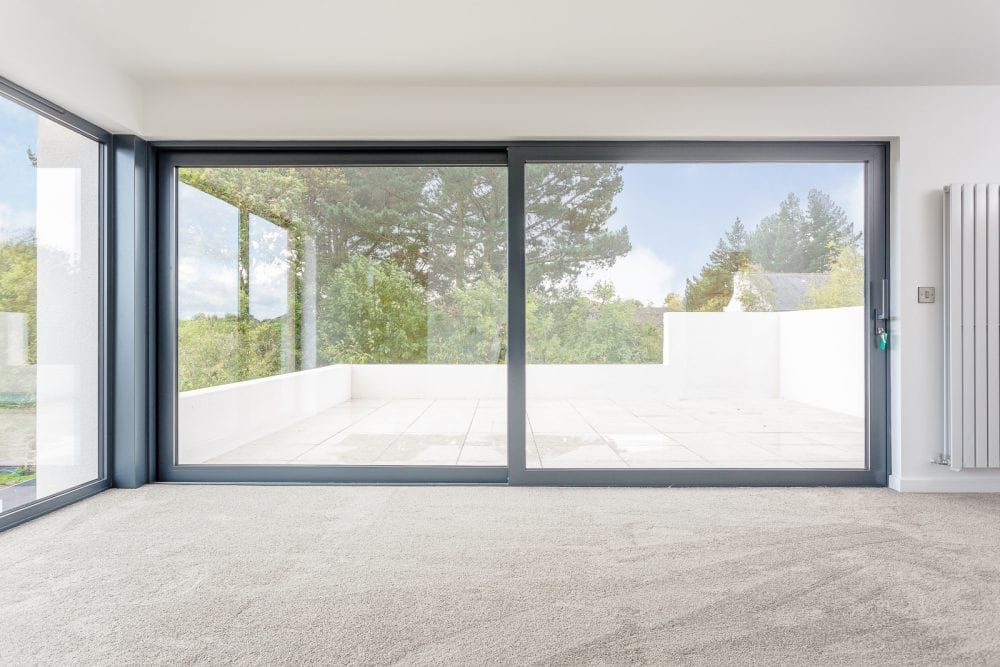
Every roller fabric has a maximum width it can be made in without a join, and very wide or tall blinds need a heavier tube so they do not bow in the middle and crease the fabric. For a wide picture window or a run of windows, two options work well:
- Linked blinds: two or three rollers on shared brackets, driven by one chain or motor, with only a small gap between fabrics.
- Separate blinds per pane: lined up with the window mullions, so each one can be raised independently.
We will tell you at the survey which approach suits your window.
Finishing touches
A cassette or headbox hides the roll for a cleaner look, especially on modern aluminium frames. Bottom bars come in plain, sealed-in or decorative finishes, and shaped bottom edges or a pull ring give a more traditional look. Day-and-night rollers, with alternating sheer and solid bands, are an alternative when you want privacy and daylight from one blind.
Room-by-room suggestions
- Kitchen: wipe-clean or screen fabric, recess fitted, chain on the side away from the hob.
- Bathroom: PVC or moisture-resistant fabric; avoid natural fibres that can mark with mildew.
- Home office: a low-openness screen fabric facing a monitor, so you cut glare without losing the view.
- Garden room or extension: large linked rollers above sliding doors, set high enough that the fabric clears the frames when raised.
Common roller blind mistakes
- Putting the chain on the side where a sofa or bed will block it.
- Choosing pure white fabric for a south-facing room; it glows with glare.
- Ignoring handles and restrictor stays, which snag the fabric on a standard roll.
- Measuring before new windows are fitted. If you are replacing frames with us, we measure for blinds once they are in.
Care
Vacuum on a low setting with a brush head. Wipe PVC fabrics with mild soapy water. Spot-clean woven fabrics gently and never fold or crease them, because creases in a roller rarely fall out.
Arrange a roller blind survey
We bring roller fabrics to your home, measure every window and recommend the right roll and fixing for each one. To book a free visit, call 01753 965 005 or ask for a quote online. We work from Fifield, near Windsor and Maidenhead, and cover homes across Berkshire, Bucks, Surrey, west Kent and north West Sussex.
Frequently asked questions
What is the difference between a standard and reverse roll blind?
On a standard roll the fabric drops from behind the tube, close to the glass, which looks neat and lets in less light at the edges. On a reverse roll it drops from the front of the tube, sitting slightly further into the room. Reverse roll clears window handles and deep sills and hides the tube behind the fabric.
Are roller blinds suitable for bathrooms?
Yes, provided you choose a PVC or moisture-resistant fabric that copes with steam and can be wiped clean. Natural fibre fabrics can mark or develop mildew in humid rooms. A recess-fitted roller with a spring or motorised mechanism keeps the blind tidy and avoids a chain hanging near the bath or basin.
Can I see out through a roller blind?
With a screen or sunscreen fabric, yes. These meshes cut glare and heat while keeping a view, so they suit home offices and kitchens. The lower the openness factor, the less you see through. At night, with lights on inside, people outside can see in, so bedrooms need a denser fabric or a second blind.
How wide can a roller blind be?
It depends on the fabric, because each one has a maximum width without a join, and on the tube, which must be strong enough not to bow. Very wide windows are often better served by two or three linked rollers on shared brackets, or separate blinds lined up with the window mullions. We confirm the options at the survey.
Are roller blinds child safe?
They can be. Blinds are made to BS EN 13120, and any roller with a looped chain must have a tensioner fixed firmly to the wall or frame so the chain stays taut. For children's rooms, spring-operated or motorised rollers remove the chain entirely, which is the safest option.