
Side hinged garage doors are a pair of large doors that open outwards like French doors, either as two equal leaves or as one wide leaf and one narrow one. They need no headroom and no ceiling space, let you walk in through one leaf without opening the whole door, and suit period homes, coach houses and garages used for bikes, tools or a workshop. The one thing they ask for is clear space in front for the leaves to swing. Inspired Glazing surveys and fits side hinged doors across Berkshire, Buckinghamshire, Surrey, west Kent and north West Sussex. For the overview of all four types, see our garage doors page.
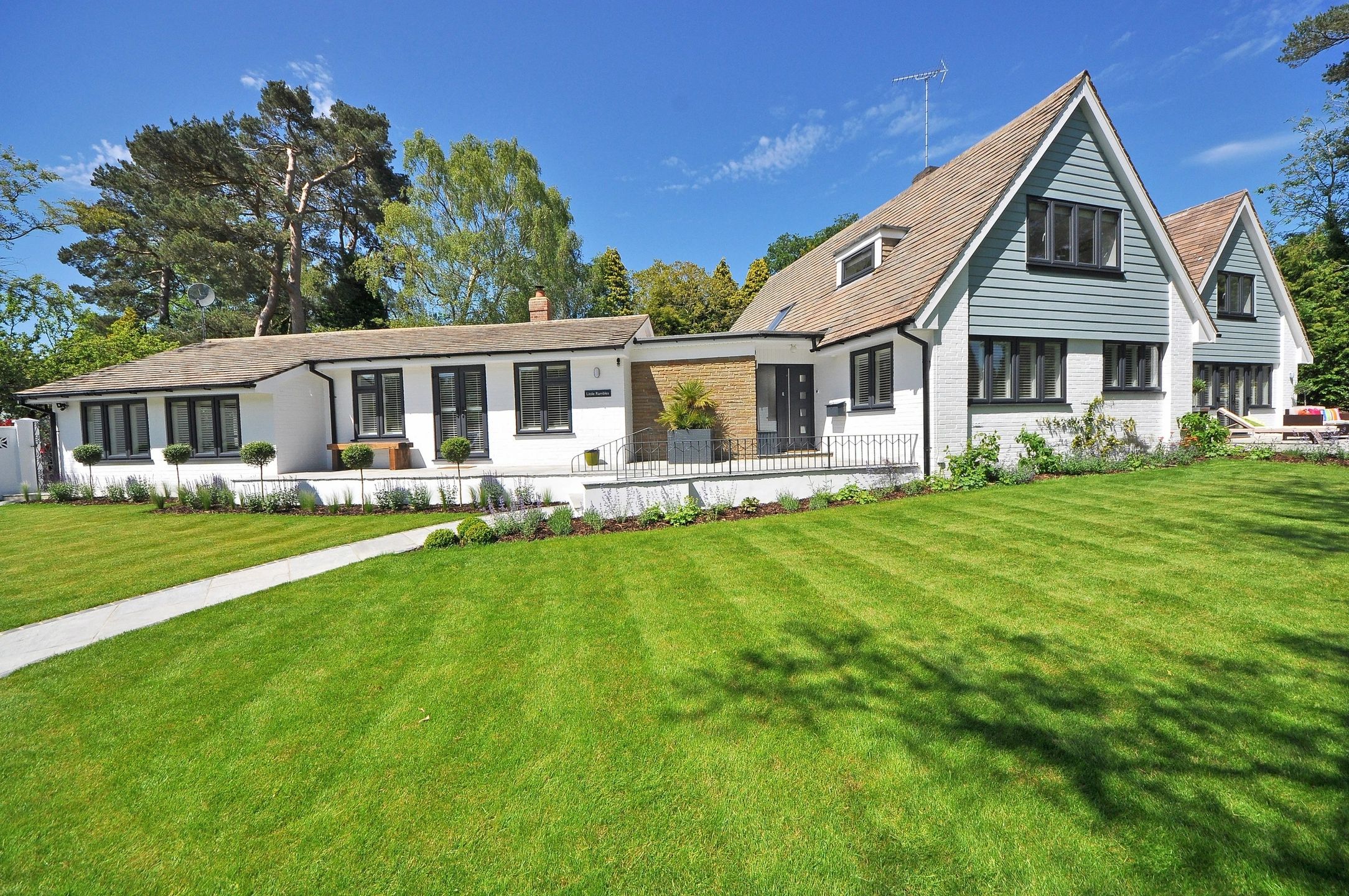
Who side hinged doors suit
- Garages with little or no headroom, such as those with a beam, a room or a low roof immediately behind the lintel, where roller boxes and overhead tracks will not fit.
- Garages used every day on foot. Opening one leaf to wheel a bike or bin out is quicker than raising a whole door, and wears the mechanism less.
- Older and period properties, including Victorian and Edwardian outbuildings and converted stables, where vertical-opening doors look too modern.
- Garages with a loft or storage overhead. Nothing runs across the ceiling.
They are less suited to very short drives, drives that rise towards the garage, and spots where the leaves would swing over a pavement or neighbour’s path. A roller garage door is often the answer there.
“Professional service, good communication and attention to detail throughout the job. The finished work looks fantastic and was exactly what I needed.”
“Everything from the sales to the installation was a perfect experience. We love our sliding doors and windows.”
“Excellent work done in installing the new door. Price was very competitive. Would highly recommend.”
Leaf configurations
Equal pair
Two leaves of the same width give a balanced, symmetrical look. You open both to drive in, and either one for access on foot.
Unequal pair
Often split around two-thirds and one-third. The wider leaf is the everyday door for people, and the narrow leaf stays bolted until you need the full width for a car. This is the most practical layout for many households.
Single leaf
For narrower openings, such as a bike store or a garage converted to storage, one large hinged door can work. It needs the most swing space.
Glazed and part-glazed leaves
Glazed top panels bring daylight into a workshop. Choose obscure or high-level glass if you do not want the contents on show.
Swing space and the drive
Each leaf sweeps an arc equal to its width. Before ordering, check that the arc is clear of cars, walls, steps, downpipes and planters. Check the ground too: if the drive rises even slightly in front of the garage, the bottom of the leaves can catch. Gravel drives are a common cause of doors that drag. Solutions include raising the threshold slightly, setting the hinges so the leaves rise as they open, or re-laying a strip of the drive in front of the opening. We look at levels across the whole swing during the survey.
Fit hold-open stays or ground catches so the leaves cannot slam in the wind. On exposed sites that is not optional.
Frames, thresholds and weather
Side hinged doors come in a frame fixed into the opening, with a choice of threshold. A low threshold seals best against rain and draughts but gives a small step to roll over. No threshold, with a brush or rubber seal on the leaf bottom, is easier for bikes and mowers but lets in more weather. If water runs towards the garage, a drainage channel in front of the door is worth considering.
Locks and security
A pair of hinged doors is only as strong as the way the leaves are held. Look for:
- multi-point locking on the main leaf, engaging into the frame and the second leaf;
- shoot bolts at the top and bottom of the second leaf, so it cannot be pushed in or pulled out;
- hinge bolts or security hinges, so the doors cannot be lifted off if hinge pins are attacked;
- a solid, well-fixed frame, as a strong lock in a weak frame achieves little.
Materials and the timber look
Traditionally these doors were made of timber, and that is still the look many owners want on a period house. We do not make timber doors, but there are low-maintenance alternatives that give a similar appearance without regular repainting: steel or glass-reinforced plastic (GRP) leaves with an embossed woodgrain finish, in painted colours or wood-effect foils. Ask us and we’ll confirm the styles and colours available for your opening. Colour-matching the garage doors to a composite front door or French doors at the back gives the whole house a consistent finish.
Insulated leaves are available and make sense if the garage is attached to the house or used as a workroom.
Automating side hinged doors
Side hinged doors can be motorised with arm operators fixed inside the garage, one per leaf. The operators need space on the wall beside each hinge and a power supply. Electric gate-style operation suits people who drive in and out daily but still want hinged doors for their look. The Planning Portal notes that electric garage door installations must comply with Part P of the Building Regulations. Ask us and we’ll confirm whether automation suits your opening and drive levels.
Planning points for period homes
Replacing a garage door normally falls within permitted development. Listed buildings are different: Historic England explains that listing brings extra control over changes to a building’s interior and exterior, and that owners need listed building consent for most types of work. Outbuildings in the grounds of a listed house can also be covered, so check with your council before ordering. In a conservation area, check before changing the style or material of doors visible from the street.
Common mistakes
- Not checking drive levels across the full arc of each leaf.
- Leaving out stays, so the leaves blow shut onto a car or a person.
- Choosing an equal pair when an unequal split would make daily use easier.
- Relying on a single central lock with no bolts on the second leaf.
Cost and care
Side hinged doors tend to sit towards the upper end of garage door prices because of their frames, hardware and made-to-measure leaves. See published market ranges in our garage door prices guide. To keep them working well, lubricate hinges and bolts a couple of times a year, keep the drive in front clear of gravel and leaves, and wash the leaves with mild soapy water.
Book a free survey
Call 01753 965 005 or request a free quote online, and we will measure the opening and check the swing space and levels.
Frequently asked questions
How much space do side hinged garage doors need to open?
Each leaf sweeps an arc equal to its own width, so you need that much clear space in front of the garage, free of cars, steps, planters and downpipes. An unequal pair reduces the swing of the everyday leaf. The ground must also be level or fall away, or the leaves may catch. We check levels across the full arc at survey.
Can side hinged garage doors open inwards?
Some can, which helps where there is no room to swing outwards, but it uses space inside the garage and needs careful sealing against rain because the leaves open against the weather. Outward opening is more common and seals better. Ask us and we'll confirm what is possible for your opening and garage layout.
Are side hinged garage doors secure?
They can be very secure if the hardware is right. Look for multi-point locking on the main leaf, shoot bolts top and bottom on the second leaf, and hinge bolts so the leaves cannot be lifted off. A solid frame fixed firmly into the brickwork matters just as much. Older doors with one central lock are much weaker.
Can I get side hinged garage doors that look like timber?
Yes. We do not make timber doors, but steel and GRP leaves are available with embossed woodgrain textures and wood-effect or painted finishes. They give a traditional look on period houses without the regular sanding and repainting that real timber needs. Ask us and we'll confirm which styles and colours suit your size of opening.
Can side hinged garage doors be made electric?
Yes. Arm operators, similar to those used on gates, can be fitted inside the garage, one per leaf. They need wall space beside each hinge and a power supply installed in line with Part P. Automation works best where the drive is level and the leaves are well supported. We'll check your opening before recommending it.