
A stable door is an external door split horizontally into two leaves, so you can open the top half for air and light while the bottom half stays shut to keep toddlers, dogs or chickens where they belong. Closed and bolted together, the two halves work as a single door. Today they are made in composite and UPVC with modern multipoint locks, and they suit country kitchens, cottages, farmhouses and any back door that opens onto a busy garden. Inspired Glazing supplies and fits stable doors across Berkshire, Buckinghamshire, Surrey, west Kent and north West Sussex; ask us and we’ll confirm which styles and colours are available for your sizes.
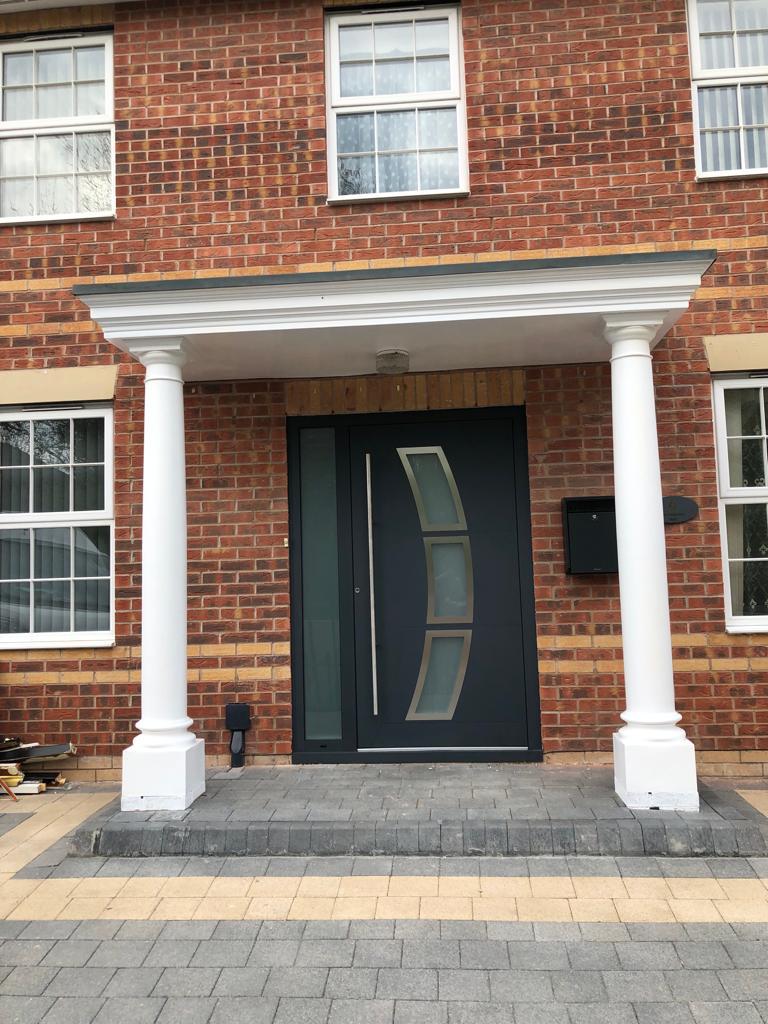
Stable doors are one style within our wider composite doors and external doors ranges. This page looks only at the split design and what it means in practice.
How a stable door works
Each leaf has its own hinges, and the two leaves overlap at the split so the joint can be sealed against weather. The bottom leaf carries the main key-operated lock. In a typical modern system, such as the stable door lock described by hardware maker MACO, a bolt connects the two halves when the bottom lock is engaged so both leaves open and close as one door, while the top leaf has its own latch and deadbolt so it can be opened on its own with the bottom half still secured.
In daily use that gives you three modes: both halves locked together as a normal secure door; the top open and the bottom latched; or both halves opened together to walk through.
“Professional service, good communication and attention to detail throughout the job. The finished work looks fantastic and was exactly what I needed.”
“Everything from the sales to the installation was a perfect experience. We love our sliding doors and windows.”
“Excellent work done in installing the new door. Price was very competitive. Would highly recommend.”
Where stable doors work best
- Kitchen back doors: fresh air while cooking without the dog wandering off, and a natural spot to chat over the bottom half.
- Cottages and rural homes: a stable door looks right on a brick-and-flint cottage, a tile-hung Surrey house or a converted barn, where it echoes the building’s working past.
- Utility and boot rooms: a way to air a damp room without leaving it open to the garden.
- Homes with young children or animals: the bottom leaf acts as a gate that does not need a separate stair-gate-style barrier.
They are less suited to a busy pavement-facing front door in town, where an open top half invites callers to lean in, and to very narrow openings where the open top leaf gets in the way.
Composite or UPVC stable doors?
Composite stable doors are the more common choice. The thick, rigid slab gives each half a solid, quality feel, and the woodgrain-textured skins and cottage or boarded designs suit the homes stable doors usually go on. They are a durable timber-look alternative if you like the traditional appearance but not the repainting.
UPVC stable doors cost less and match UPVC windows on the same elevation. Panels are lighter than a composite slab, so they feel less substantial when you swing the top leaf open, but they are easy to keep clean.
We do not make timber doors. If you are set on a fully aluminium stable door, ask us and we’ll confirm what is possible for your opening.
Design choices
Where the split sits
The split is normally around waist height so the bottom leaf works as a barrier and a leaning ledge. On a door with glass, check how the split relates to the glazing: most designs put the glass in the top leaf only.
Glazing in the top leaf
A glazed top leaf brings far more light into a kitchen. Because the bottom of that glass will be within 1,500mm of the floor, it must be safety glass under building control guidance on safety glazing. Obscure or decorative glass gives privacy where the door faces a neighbour.
Colour and hardware
Heritage greens, creams, blues and black suit cottage stable doors; anthracite grey suits a modern farmhouse kitchen. Black ironmongery-style handles and knockers complete the look. See our guides to black front doors and grey front doors for colour advice.
Practical limits worth knowing
- Swing space: the open top leaf sits at head height. Make sure it clears wall cupboards, a window reveal or a light fitting, and fit a stay or hold-open if it would otherwise swing about.
- Weather: the top half is not designed to be left open in driving rain, and water on the bottom leaf’s top edge needs to run outwards. A canopy over a stable door makes it far more usable.
- Width: very narrow doors leave a small top leaf that feels more like a hatch. Very wide doors make heavy leaves; a stable door is a single-leaf design, not a pair.
- Letterplates: if a stable door is your front door, a letterplate goes in the bottom leaf, which affects the panel design you choose.
Security and Building Regulations
A stable door has two leaves, more hinges and an extra joint, so ask whether the specific stable doorset, in the configuration you are buying, has been tested to PAS 24, and always fit an anti-snap cylinder. Never leave the top half open when the room is empty: it gives an easy reach to the inside handle and the bottom-leaf lock.
As with any replacement external door, the doorset should meet the U-value or energy rating set by Approved Document L (summarised here). Where the house is in a conservation area or covered by an Article 4 direction, swapping a standard door for a stable door may count as a change of appearance; the Planning Portal advises checking with your council first.
Common stable door mistakes
- Choosing a stable door for a north-facing back door that is never opened for air, so you pay for a feature you never use.
- Not checking that the open top leaf clears units, blinds or a window reveal.
- Expecting the top half to stay open in a storm without letting water in.
- Locking only the top leaf at night and forgetting the bottom lock that holds both halves together.
Caring for a stable door
Treat it like two doors. Check that both leaves close evenly and that the connecting bolt engages without force; a drop of light oil on the bolt and hinges each spring keeps things smooth. Wipe the seal between the leaves, where grit collects. If the halves start to sit out of line, a small hinge adjustment brings them back.
Talk to us about a stable door
We will measure the opening, check swing space and exposure, and show you composite and UPVC options at a free survey. All our doors come with a 10-year guarantee, with lead times from 10 days. Call 01753 965 005 or request a quote online.
Frequently asked questions
What is a stable door?
A stable door is a single external door split horizontally into a top and bottom leaf. You can open the top half for air and light while the bottom stays shut, or bolt the two halves together so they work as one normal door. They are popular for kitchens, cottages and homes with children or pets.
Are stable doors secure?
A good modern stable door can be secure. The bottom leaf usually carries a key-operated multipoint lock and a bolt joins the two halves, while the top leaf has its own latch. Ask whether the complete doorset is tested to PAS 24, fit an anti-snap cylinder, and never leave the top half open in an empty room.
Can you get a composite stable door?
Yes. Composite is the most popular material for stable doors because the thick slab gives each half a solid feel and the woodgrain-textured skins suit cottage designs. UPVC stable doors are also available and cost less. Ask us and we'll confirm the styles, colours and glazing options for your opening sizes.
Can a stable door be used as a front door?
It can, particularly on cottages and rural homes, but think about it carefully on a street-facing house, where an open top half invites callers to lean in. If it is your front door, the letterplate goes in the bottom leaf, and in a conservation area check with your council before changing the door style.
Can I have glass in a stable door?
Yes, usually in the top leaf, which brings much more light into a kitchen or utility room. Because that glass sits within 1,500mm of the floor, it must be safety glass. Obscure or decorative glass works well where the door faces a neighbour or a side passage and you want privacy.