
Vertical blinds are a row of upright vanes hanging from a headrail. You rotate the vanes to angle light and privacy, and draw them to one or both sides to open the window or door. They are the most practical blind for wide glazing, especially sliding patio doors, because they stack compactly beside the opening, cope with very large widths and let you replace a single damaged vane rather than the whole blind. They are also a long-standing favourite in offices. Our main blinds page compares them with other styles.
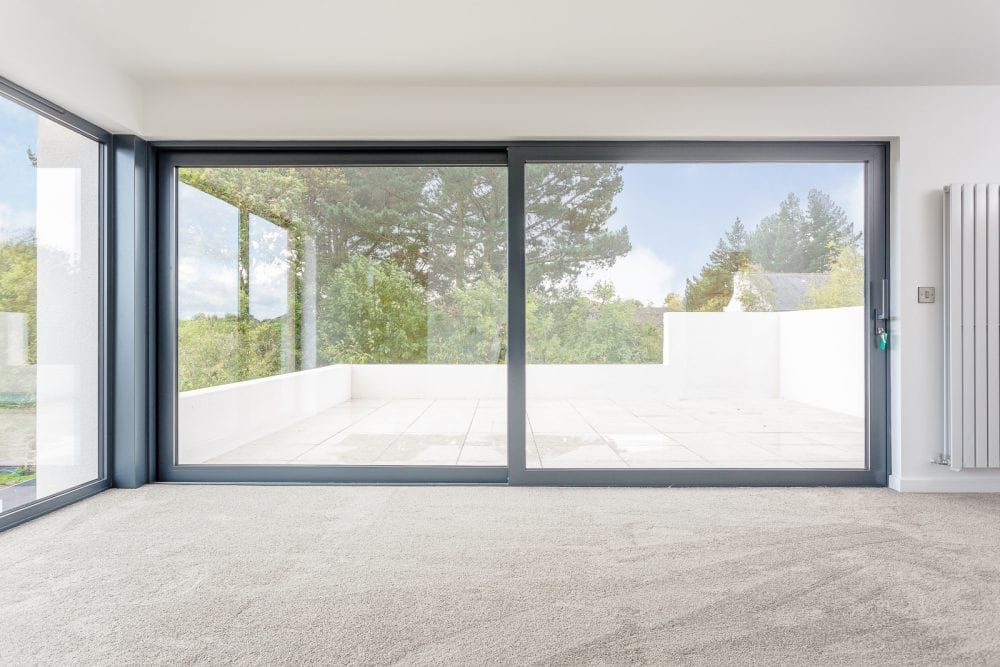
Where vertical blinds work best
- Sliding patio doors: the blind is fixed above the frame, and the panes slide behind it. See our patio doors and Reynaers sliding doors pages.
- Wide picture windows: a single headrail can span widths that would need several roller blinds.
- Offices and studios: glare control on screens across a long run of glazing, with durable vanes.
- Tall windows: vertical vanes suit tall glass and draw the eye upwards.
“Professional service, good communication and attention to detail throughout the job. The finished work looks fantastic and was exactly what I needed.”
“Everything from the sales to the installation was a perfect experience. We love our sliding doors and windows.”
“Excellent work done in installing the new door. Price was very competitive. Would highly recommend.”
Planning the stack direction
When opened, the vanes gather into a stack. The way they stack matters more than people expect:
- Left or right stack: all vanes draw to one side. On a sliding door, stack them over the fixed pane, so the opening pane is fully clear.
- Split stack: vanes part in the middle and draw to both sides, useful for a central opening or a pair of French doors.
- Centre stack: vanes draw together into the middle, for windows with opening sashes at each end.
Also allow space for the stack to sit beside the opening rather than over it. Fixing the headrail wider than the door lets the stack park on the wall.
Fixing and clearance
Verticals can be fixed to the face of the wall, up into the ceiling or inside a recess. Inward-opening doors and windows need the vanes to clear the handles and the swing of the sash, so they are usually fixed outside the recess with enough projection. Sliding doors are easier, because nothing swings into the room. We check handle depth, floor level and any skirting or radiators at the survey.
Vane widths and materials
Vanes are commonly made in two widths, roughly 89 mm and 127 mm. Narrower vanes suit domestic windows and give finer control. Wider vanes suit large doors and offices, with fewer vanes to manage. Materials include:
- Stiffened fabric: the most common choice, available in plain, textured, patterned, dim-out and blackout versions.
- PVC: wipe-clean and tough, ideal for kitchens, utility rooms and busy offices.
- Screen fabric: cuts glare while keeping some view.
Commercial clients sometimes need a flame-retardant fabric; tell us what your fire risk assessment requires and we will match it.
Shaped and sloping windows
Vertical blinds can be made with an angled headrail for raked windows and some conservatory side frames, with each vane cut to its own length. That is one of the few blind types that handles a sloping top edge neatly.
Replacement vanes
A single snapped, stained or faded vane does not mean a new blind. If the headrail runs smoothly, replacement vanes are often all you need. To get them right we check:
- Vane width, measured across the face.
- Drop, from the top of the hanger to the bottom of the vane.
- Hanger type, the small clip that connects the vane to the headrail carrier.
- Bottom weights and chains, which keep the vanes hanging straight.
Older vanes may have faded in the sun, so a new single vane can stand out. Replacing a full set keeps the colour even. If the headrail is noisy, jumping or no longer rotating all the vanes together, a complete new blind is usually better value.
Child safety
Verticals are operated by a looped chain or a wand. Blinds are made to BS EN 13120, and the chain must be held taut by a tensioner fixed firmly to the wall or floor. The bottom-weight chain should also be kept tidy. The government’s blind cord advice is to keep cots, beds and furniture away from blinds, which matters with floor-length vanes beside a door. A wand control removes the looped chain entirely.
Vertical blinds or something else for sliding doors?
Verticals are not the only answer for wide glazing. A large roller fixed above the frame gives a cleaner, more modern look when raised, but it needs height above the door for the roll and becomes heavy on very wide openings, which is where motorisation helps. Perfect-fit blinds on each pane suit doors that fold or hinge rather than slide. Tracked shutters are a more permanent option. Verticals win when you want fine control over light while the doors are in use, and good value across very wide glass.
Common vertical blind mistakes
- Stacking the vanes over the opening pane of a sliding door.
- Fixing too low, so vanes drag on the floor or catch on the door track.
- Choosing a fabric vane for a kitchen door that gets cooking splashes.
- Leaving the vanes half-rotated in a breeze, which tangles the bottom chain.
Care
Dust vanes with a soft brush or a vacuum on low suction. PVC vanes can be wiped with mild soapy water. Fabric vanes should be spot-cleaned only and left to dry hanging straight.
Book a vertical blinds visit
Whether you need a new vertical blind for patio doors or a set of replacement vanes, we can measure and quote. Call 01753 965 005 or send us your details online. Home and office visits are available across Berkshire, Buckinghamshire, Surrey, west Kent and north West Sussex.
Frequently asked questions
Are vertical blinds good for patio doors?
Yes, they are one of the most practical choices. A headrail fixed above the frame lets the doors slide freely behind the vanes, and the vanes draw into a compact stack. Stack them on the side of the fixed pane, and make the headrail wider than the door so the stack can sit on the wall rather than over the glass.
Can I replace just one vertical blind vane?
Usually, yes. You need the vane width, the drop from the top of the hanger to the bottom of the vane, and the hanger type. Bear in mind that older vanes fade, so a single new vane may look slightly brighter. Replacing the full set keeps the colour even, and the headrail stays in place.
What width vertical blind vanes should I choose?
Vanes are commonly made in two widths, about 89 mm and 127 mm. The narrower width suits most home windows and gives finer control over light. The wider width suits large patio doors and offices, giving a bolder look with fewer vanes. Both use the same principle, so it is mainly a matter of scale and style.
Are vertical blinds suitable for offices?
Yes. They handle long runs of glazing on a single headrail, control screen glare well, and PVC or tough fabric vanes stand up to daily use. Damaged vanes can be replaced individually. If your premises need a flame-retardant fabric, tell us what your fire risk assessment requires so we can match it.
How do I make vertical blinds child safe?
Make sure the operating chain is held taut by a tensioner fixed firmly to the wall or floor, and keep the bottom chain tidy. Move cots, beds and climbable furniture away from the blind. A wand-operated vertical blind removes the looped chain altogether, which is the simplest option in a family room.