
Inspired Glazing supplies and fits made-to-measure blinds for every kind of window and glazed door. We offer roller, Roman, Venetian, vertical, pleated, perfect-fit, blackout and motorised blinds, plus blinds for bifold and sliding doors, roof lanterns and conservatories. We measure each window ourselves, help you choose a fabric or slat that suits the room, and fit the blinds neatly and safely, with child safety built in. We cover homes across Berkshire, Buckinghamshire, Surrey, west Kent and north West Sussex from Fifield near Windsor.
Types of blind and where each one works best
Roller blinds
A single panel of fabric that rolls onto a tube at the top of the window. Roller blinds are simple, tidy and come in a huge range of plain, patterned, blackout, dim-out and wipe-clean fabrics. They suit kitchens, bathrooms, home offices and children’s rooms. A day-and-night or vision roller has alternating sheer and solid stripes that slide past each other, so you can move from soft filtered light to privacy without raising the blind.
Roman blinds
Fabric that lifts into soft, deep folds. Romans bring warmth and texture to living rooms and bedrooms, and they can be lined for extra insulation and darkness. They stack quite deep at the top of the window, so allow for that above the glass.
Venetian blinds
Horizontal slats in aluminium, real wood or faux wood that tilt to control light and privacy precisely. Aluminium slats are light and suit kitchens and bathrooms. Wooden slats look warmer and suit living spaces. Faux wood copes better with steam and humidity than real timber.
Vertical blinds
Vertical louvres that rotate and draw to one side. They are practical for wide windows and patio doors, they stack compactly, and the fabric or PVC vanes are easy to replace individually if one gets damaged.
Pleated blinds
Crisp, finely pleated fabric that is light and compact. Pleated blinds fold into a very slim stack, so they suit shaped windows, small windows and roof glazing. Honeycomb or cellular versions trap air in their cells for better insulation.
Perfect-fit blinds
These blinds sit in a slim frame that clips into the window bead, with no drilling into the frame. The blind moves with the sash, so it suits tilt and turn windows, top-opening casements and doors. Perfect-fit frames work on most UPVC windows with suitable beading, and we will check yours at the visit.
Blackout and light control
Blackout fabrics block light passing through the blind, but light can still leak round the edges. For a properly dark bedroom or nursery, combine a blackout fabric with a recess fit close to the glass, side channels or a perfect-fit frame. Dim-out fabrics take the glare off without total darkness. In south-facing rooms, think about a solar-reflective backing to reduce heat build-up and protect furniture from fading.
Motorised blinds
Motorised blinds raise and lower at the touch of a remote, a wall switch or a phone app, and many systems can be scheduled or linked to a smart home hub. They are worth it for tall, wide or hard-to-reach glazing, for rooflights, and wherever you want a cordless, child-safe finish. Battery and rechargeable motors avoid running new cables. Wired motors suit new builds and extensions where the electrician can plan for them.
Blinds for bifold and sliding doors
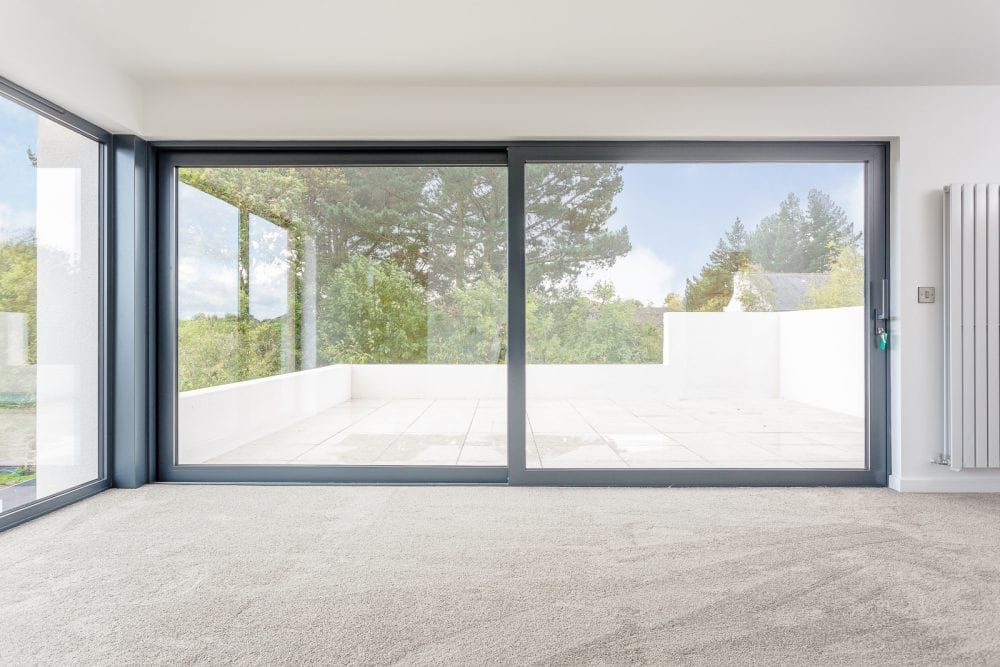
Large glazed doors need blinds that never stop the doors opening. For bifold doors the usual answer is a slim blind fitted to each glass panel, such as a perfect-fit pleated or Venetian blind, so each blind folds away with its door leaf. For sliding doors a vertical blind or a wide roller fitted above the frame works well, because the panes slide past behind it. If you are still choosing doors, our bifold vs sliding doors guide covers how each one affects your blind options.
Roof lantern, skylight and conservatory blinds
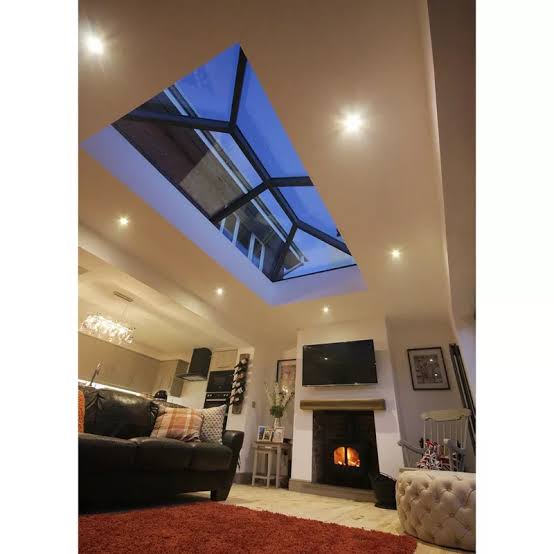
Roof glazing lets in a lot of light and heat. That is lovely in spring but hard work on a July afternoon, and it can make a room feel cold on winter nights. Pleated or tensioned blinds made for sloping and horizontal glass stay taut without sagging. Motorisation is the practical choice on high ceilings. Conservatory blinds for roofs and side frames are made to the exact angles of each panel. Reflective or honeycomb fabrics help make the room comfortable for more of the year.
Child safety and looped cords
Looped blind cords and chains are a strangulation risk to young children. Since 2014, blinds have been made to BS EN 13120, with safety devices tested to BS EN 16433 and BS EN 16434. Those standards require safety devices on looped cords and chains, limits on cord length, and clear warnings. RoSPA guidance also says that where an extra safety device is needed to make a blind safe, it must be installed. The Office for Product Safety and Standards advises:
- fix tensioners firmly so the cord or chain is held tight;
- fit cleats out of reach, at least 1.5 metres above the floor, and wind spare cord onto them;
- keep cots, beds, high chairs and climbable furniture away from blind cords.
We fit every safety device supplied with a blind. In children’s rooms we recommend designs that are safe by design, such as cordless, spring-operated, wand-controlled, perfect-fit or motorised blinds, with no loose cord at all.
How to choose
- Room use: moisture-resistant fabrics or slats for kitchens and bathrooms, blackout for bedrooms, and softer fabrics for living spaces.
- How the window opens: tilt and turn and inward-opening windows need blinds that move with the sash or clear it completely. See our tilt and turn windows page.
- Recess or face fit: fitting inside the reveal looks neat. Fitting above and beyond it blocks more light and can make the window look larger.
- Stack: how much glass is covered when the blind is fully up. Romans stack deepest, and pleated and roller blinds the least.
- Style: blinds can echo frame colours. Crisp white or grey suits modern aluminium, and wood tones suit period homes.
If you want something more permanent with a furniture-like finish, compare blinds with our plantation shutters.
Measure, make, fit
- Home visit. We bring samples, look at each window or door and measure precisely.
- Quote. You receive a written quote by room, showing the fabric, operation and fixing style.
- Made to measure. Each blind is made to the exact size of your window.
- Fitting. We fit, level and adjust each blind, install the safety devices, and show you how everything works.
New windows or doors on order with us? It is easiest to measure for blinds once the new frames are in, so the fit is exact.
Care
Dust slats and fabrics regularly with a soft brush or a vacuum on low suction. Wipe-clean fabrics and aluminium slats can be sponged with mild soapy water. Avoid soaking wooden slats. Check child safety devices are still fixed in place every so often, particularly after decorating.
Book a free blinds visit
For a free measure and quote, call 01753 965 005 or request a quote online.
Frequently asked questions
What are the best blinds for bifold doors?
The most practical choice is a slim blind fitted to each glass panel, such as a perfect-fit pleated or Venetian blind. Each blind then folds back with its own door leaf and never blocks the opening. A single large blind above the frame usually gets in the way when the doors are folded open, so it is rarely the best option.
Are perfect-fit blinds suitable for my windows?
Perfect-fit blinds clip into the beading of most UPVC windows and some aluminium windows without any drilling. They suit tilt and turn and top-opening windows because the blind moves with the sash. Whether they fit depends on the depth and shape of your beading, which can be checked quickly during a measuring visit.
What are the child safety rules for blinds?
Blinds are made to BS EN 13120, which requires safety devices on looped cords and chains, limits on cord length and clear warnings. Government advice is to tension chains, fit cleats at least 1.5 metres above the floor, and keep cots and furniture away from cords. Cordless or motorised blinds remove the hazard altogether.
Do blackout blinds make a room completely dark?
Blackout fabric blocks light passing through it, but some light can still creep round the edges. To get a room as dark as possible, fit the blind in the recess close to the glass, or use perfect-fit frames or side channels that close the gaps. Dim-out fabrics are a softer option where full darkness is not needed.
Can you fit blinds in a roof lantern or conservatory roof?
Yes. Roof lanterns, skylights and conservatory roofs need blinds designed to stay taut on sloping or horizontal glass, usually pleated or tensioned styles made to the exact angle of each pane. Motorised operation is the practical choice for high or hard-to-reach glazing. Reflective and honeycomb fabrics help control summer heat and winter heat loss.