
Tilt and turn windows open two ways from one handle. Turn the handle up and the top of the sash tips inwards by a few centimetres for secure, draught-free ventilation; turn it sideways and the whole sash swings into the room like a door, so you can clean the outside glass from indoors or open the window fully. We fabricate aluminium tilt and turn windows at our own workshop in Fifield, near Windsor, and fit them with our own team across Berkshire, Buckinghamshire, Surrey, west Kent and north West Sussex.
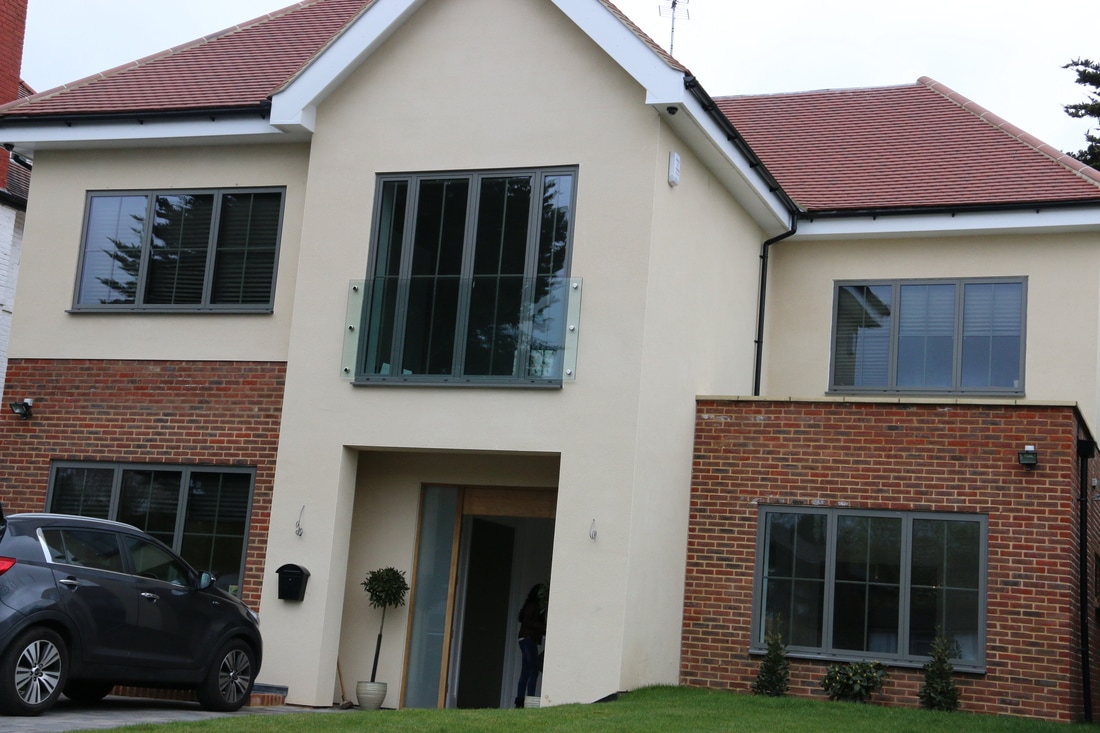
How a tilt and turn window works
The clever part is hidden inside the frame. A single handle drives a set of locking points and hinges around the sash, and its position decides how the window behaves:
- Handle down: closed and locked at several points around the frame.
- Handle up: tilt position. The sash is held at the bottom and leans in at the top, leaving a narrow gap for fresh air that is hard to reach from outside and keeps rain out better than a wide-open casement.
- Handle horizontal: turn position. The sash is hinged on one side and opens fully inwards.
Because the vent opens into the room, nothing projects over a path, patio or balcony. That makes tilt and turn a practical choice for ground-floor windows beside walkways, for flats and for upper floors that are difficult to reach with a ladder.
Aluminium tilt and turn windows
Aluminium is strong for its weight, which matters on a tilt and turn window: a large inward-opening sash puts real load on its hinges, and a stiff frame helps it stay square and close sweetly for years. It also allows slimmer sightlines than you would usually get in a comparably sized plastic frame, and it can be powder coated in almost any colour.
It is worth being clear about which systems we use. Our core window range, the Reynaers SlimLine 68, is an outward-opening casement window, so it is not the system we use for tilt and turn. For inward-opening tilt and turn we use other aluminium systems we fabricate. Cortizo, for example, lists tilt and turn among the inward-opening types for its COR 70 C16 ST window system, alongside turn-only, tilt and slide and bottom-hung vents, and quotes acoustic insulation of up to Rw 46 dB for that system. As always, the performance of a finished window depends on its size, glass and hardware, and we will confirm the right system for your openings at survey.
If you like the look of SlimLine 68 elsewhere in the house, we can talk about how to keep a consistent appearance across different systems: matching colours, similar frame proportions and the same glazing bar pattern go a long way.
UPVC tilt and turn windows
Many people searching for tilt and turn are comparing aluminium with UPVC. Our UPVC windows are made in the Selecta Advance 70 system. If a UPVC tilt and turn is what you have in mind, tell us at the quote stage and we will check which opening styles are available for your sizes before recommending anything. We would rather give you an accurate answer than promise a configuration on a web page. Our UPVC windows and doors page covers the range in more detail.
Tilt and turn vs casement windows
Both are hinged windows, but they behave quite differently day to day.
- Opening direction: a casement opens outwards; a tilt and turn opens inwards. Outward-opening sashes leave the room clear but swing over whatever is outside. Inward-opening sashes keep the outside clear but need space indoors.
- Ventilation: the tilt position gives a secure, rain-resistant trickle of air. A casement is usually either shut, on a night-vent latch, or open.
- Cleaning: tilt and turn wins easily. Both faces of the glass are reachable from inside.
- Furniture and blinds: this is the main drawback of tilt and turn. A deep sill, a desk or a kitchen tap in front of the window will get in the way of the turn position, and blinds need to be fitted to the sash or set well back.
- Appearance: casements suit most British houses, especially period homes. Tilt and turn has a more continental, contemporary look and tends to suit modern builds, extensions and flats.
Plenty of homes end up with a mix: casements in the main rooms and tilt and turn where access or ventilation matters. Our guide to modern casement windows explains the alternative in more depth.
Tilt and turn windows as fire escape windows
In the turn position the sash opens fully, which is why tilt and turn is often considered for escape windows in bedrooms and loft rooms. Building Regulations guidance on means of escape, as summarised by local authority building control, looks for an unobstructed openable area of at least 0.33 m², with no clear dimension less than 450 mm high or 450 mm wide, and the bottom of the opening generally between 800 mm and 1,100 mm above the floor. Whether a particular window qualifies depends on the size of the sash and how the hardware sits, so we measure the clear opening, not just the overall frame. If your current windows act as escape windows, the replacements should not make the situation worse, and we will flag it at survey. For anything unusual, check with your local building control team.
Cleaning and living with tilt and turn
Cleaning is one of the biggest reasons people choose this style, especially on first floors and above. Turn the handle to the side, open the sash into the room and both sides of the glass are in easy reach. A few practical tips:
- Wipe the gasket seals with warm soapy water occasionally and keep the drainage slots in the bottom of the frame clear.
- Check the hinges and locking points once or twice a year, and lubricate moving parts lightly if they start to feel stiff.
- Avoid opening the sash fully in strong wind, and use the tilt position for everyday ventilation.
- If you have young children, ask us whether restrictor or lockable handle options are available for your chosen system, so the window can tilt but not swing fully open.
Glass, energy and security
A tilt and turn window is only as good as the glass and hardware inside it. We will talk you through double or triple glazing (see our double vs triple glazing guide), obscure glass for bathrooms, and acoustic laminated glass if the window faces a busy road (our sound reducing windows page explains the options). Multi-point locking around the sash is a natural strength of the design, and we can specify hardware tested to recognised security standards where it is available for the system. For thermal performance, our energy-rated windows page explains what the numbers mean.
Colours and finishes
Aluminium tilt and turn windows can be powder coated in a wide range of RAL colours, and dual-colour finishes let you choose one colour outside and another inside. Anthracite grey and black are both popular choices; see our page on grey and black windows for help choosing.
What affects the cost
Our aluminium windows start from £400, and the price of a tilt and turn window depends mainly on:
- the size of the sash and the weight of the glass it has to carry;
- the system chosen and the hardware specification;
- glass type: triple, acoustic, laminated or obscure;
- colour, including dual-colour finishes;
- access and any making good needed around the opening.
Because we make the frames ourselves, lead times start from 10 days, and our windows come with a 10-year guarantee. Our aluminium windows cost guide gives more detail on pricing. If you are in a conservation area or a listed building, read our note on planning permission for replacement windows before you commit to a change of style.
Book a free survey
If you are weighing up tilt and turn windows for a home in Windsor, Maidenhead or anywhere across our area, we will measure up, check clearances and escape requirements and recommend the right system honestly. Call 01753 965 005 or request a free quote.
Frequently asked questions
What is a tilt and turn window?
It is an inward-opening window controlled by one handle. Turn the handle up and the top of the sash tilts inwards a few centimetres for secure ventilation. Turn it to the side and the whole sash swings into the room like a door, so you can open it fully or clean the outside of the glass from indoors.
Is tilt and turn better than a casement window?
It depends on the room. Tilt and turn is better for cleaning upper floors, secure ventilation and openings beside paths or balconies, because nothing swings outwards. Casements suit most traditional British houses and leave the room clear inside. Many homes use both, choosing tilt and turn only where access or ventilation matters most.
Can a tilt and turn window be used as a fire escape?
Often, yes, because the sash opens fully in the turn position. Escape guidance generally looks for a clear opening of at least 0.33 m², at least 450 mm high and wide, with its base 800 mm to 1,100 mm above the floor. We measure the actual clear opening at survey rather than assuming every size qualifies.
Is the Reynaers SlimLine 68 available as tilt and turn?
No. SlimLine 68, our core aluminium window, is an outward-opening casement system, so we do not use it for tilt and turn. For inward-opening tilt and turn we use other aluminium systems we fabricate, such as Cortizo systems that list tilt and turn among their opening types, matched in colour to the rest of your windows.
Do tilt and turn windows get in the way of blinds?
They can. Because the sash opens into the room, blinds fixed to the wall or a deep sill can obstruct it. Blinds fitted directly to the sash, or set back far enough to clear it, avoid the problem. Think about furniture, taps and radiators under the window too before choosing this style for a room.