
Inspired Glazing replaces fascias, soffits, bargeboards, cladding, gutters and downpipes, which together are known as the roofline. We use low-maintenance UPVC in a choice of colours and woodgrain finishes. If your timber boards are rotting, the paint is flaking or the gutters overflow every time it rains, a new roofline protects the roof edge and the walls below. It also smartens the house and takes repainting off your list. We survey, quote and fit across Berkshire, Buckinghamshire, Surrey, west Kent and north West Sussex from our base in Fifield near Windsor.

What each part of the roofline does
- Fascias are the long boards fixed to the ends of the rafters along the eaves. They hold up the bottom row of tiles and carry the gutters.
- Soffits are the horizontal boards under the eaves that close the gap between the fascia and the wall. They often include ventilation for the roof space.
- Bargeboards run up the sloping edges of a gable end and protect the end of the roof from wind and rain.
- Cladding covers wall areas such as dormers, gable apexes and bay window tops with weatherproof boards, often in a shiplap or tongue-and-groove profile.
- Gutters and downpipes collect rainwater from the roof and carry it to the drains, away from the walls and foundations.
Because the parts depend on each other, it usually makes sense to replace them together. New gutters on a rotten fascia will not last.
Signs your fascias, soffits or gutters need replacing
- paint that peels or blisters soon after redecorating;
- soft, split or crumbling timber, especially at joints and corners;
- gutters that sag, leak at the joints or overflow in heavy rain;
- damp patches, green staining or algae on the walls below the gutters;
- gaps around the eaves where birds, wasps or squirrels get in;
- tiles at the eaves that have dropped or moved;
- old, brittle, discoloured plastic guttering that cracks when cleaned.
Leaving these problems can lead to damp walls, rotten rafter ends and water getting into the roof space, all of which cost far more to put right than a new roofline.
Why UPVC roofline?
UPVC fascias and soffits do not rot, flake or need painting. An occasional wash is all they ask for. They come in white, black, greys, browns and woodgrain-effect foils, so you can match them to your windows. Many homeowners choose anthracite or black to sit with grey and black windows, while white remains the classic choice for brick and rendered homes. Matching gutters and downpipes come in round, square and ogee (deep, decorative) profiles. Ogee suits older and period-style houses best.
Full replacement or capping?
There are two ways to do the job. Full replacement removes the old timber boards completely, checks and repairs the rafter ends, and fits new UPVC boards directly. Capping, sometimes called overboarding, fixes a thin UPVC cover over the existing timber. Capping is cheaper but hides whatever is underneath, including rot that will carry on spreading. We only recommend capping where the timber behind is genuinely sound, and we will show you what we find.
Roof ventilation
A roof space needs air moving through it. Without enough ventilation, warm moist air from the house condenses on the cold underside of the roof and can lead to damp, mould and rotting timbers. This matters more once a loft has been well insulated. When we replace the roofline we can include ventilated soffits or over-fascia vents to let air in at the eaves, and fit eaves protection so the felt or membrane drains properly into the gutter. Insulation pushed hard into the eaves can block the airflow, so we check for this too.
Bats: a legal duty, not a formality
All bat species, their breeding sites and their resting places are fully protected by law in the UK. Government guidance says it is an offence to damage or destroy a roost or to disturb a bat while it is sheltering. Penalties include an unlimited fine and up to six months in prison. The Bat Conservation Trust notes that bats often roost behind cladding, soffits and fascias, or use them to reach roosts elsewhere.
We look for signs of bats, such as droppings stuck to walls or windowsills below the eaves, during the survey. If we find any, we pause and you get advice before work starts. The National Bat Helpline can arrange free advice through Natural England’s volunteer bat roost visitors for small-scale works on homes. Where a roost cannot be kept, an ecologist and a licence may be needed. Often a simple compromise works, such as leaving an access gap or roughening new UPVC near the roost so bats can still grip it.
Asbestos in older soffits and gutters
The Health and Safety Executive lists asbestos cement and asbestos insulating board (AIB) soffits and fascias, along with asbestos cement gutters and downpipes, among the places asbestos may be found in homes. It applies to buildings built or refurbished before 2000. Flat grey soffit boards on older houses are a common example, and you cannot tell whether they contain asbestos by eye. If we suspect asbestos, we will not cut, drill or break the boards. We will recommend having a sample tested before any work goes ahead. If it is confirmed, it must be removed and disposed of correctly by a suitably qualified contractor, and AIB in particular needs a licensed specialist. We will not cut corners on this.
Scaffolding and access
Roofline work is work at height, so safe access is essential. Depending on the height of the house and the length of the run, that means a tower or a full scaffold. On a typical two-storey house we usually scaffold the elevations being worked on. Scaffolding on or over a public pavement may need a licence from the council, which the scaffolding firm normally arranges. While the scaffold is up, it is a good moment to look at other jobs at that height, such as replacing first-floor windows.
How a roofline replacement works
- Survey. We inspect the boards, gutters and rafter ends, look for bats and possible asbestos, and measure every run.
- Quote. You get a written quote setting out full replacement or capping, colours, gutter profile and access.
- Access. Scaffolding or towers go up.
- Strip out. The old gutters and boards come off, and any damaged rafter ends are repaired.
- Fit. New fascias, soffits, vents, bargeboards and cladding go on, then gutters and downpipes, set to the right fall.
- Finish. We seal joints, check the water runs to the drains, and clear away the old material.
A typical semi-detached house takes a few days, depending on the weather and what we find behind the old boards.
Looking after a new roofline
Wash UPVC boards once or twice a year with warm soapy water, and avoid abrasive cleaners or solvents. Clear the gutters in late autumn once the leaves have fallen, and fit leaf guards if you live under trees. Check that downpipes are running freely after storms.
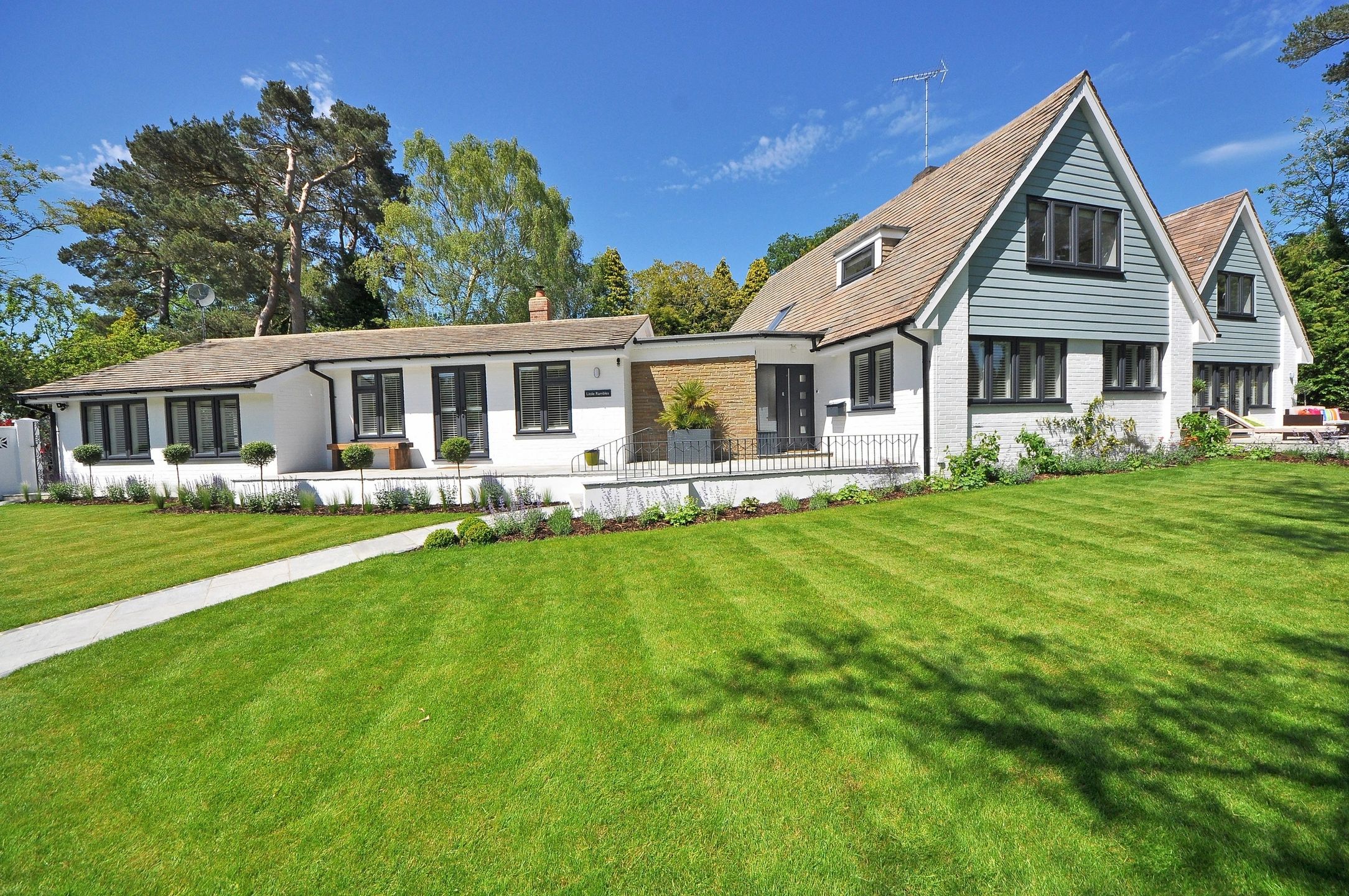
Book a free roofline survey
Thinking about your windows too? See our UPVC windows and doors, including the Advance 70 system. For a free fascias, soffits and guttering survey, call 01753 965 005 or request a quote online.
Frequently asked questions
Should fascias and soffits be replaced at the same time as gutters?
Usually, yes. Gutters are fixed to the fascia, so new gutters on old or rotten boards will soon sag or leak. Doing the whole roofline at once means one scaffold, matching colours and a single finished job. If the boards are sound and only the gutters have failed, a gutter-only replacement can still make sense.
Is capping over old fascias a good idea?
Only if the timber behind is completely sound. Capping fixes a thin UPVC cover over the existing boards. It is cheaper, but it hides any rot, which keeps spreading out of sight. Full replacement lets the installer check and repair the rafter ends. A good survey should tell you honestly which approach suits your house.
What happens if bats are found in my roofline?
Work on that area stops while you get advice. Bats and their roosts are protected by law, so damaging a roost or disturbing bats is an offence. For homes, the National Bat Helpline can arrange free advice through Natural England. Often a simple adjustment, such as keeping an access gap, lets the work go ahead.
Could my old soffits contain asbestos?
They might, if the house was built or refurbished before 2000. The HSE lists asbestos cement and asbestos insulating board soffits and fascias, as well as cement gutters and downpipes, as places where asbestos can be found. It cannot be identified by eye, so suspect boards should be tested before anyone cuts or removes them.
Do I need scaffolding for new fascias and soffits?
Almost always. Roofline work is done at eaves height, and on a two-storey house that needs scaffolding or a properly erected tower to work safely. Scaffold over a public pavement may need a council licence, which the scaffolder usually arranges. The cost of access is included in your written quote.