
Grey and black windows give a house a sharper, more architectural look than white, and anthracite grey (RAL 7016) has become the shade most people mean when they say “grey windows”. We fabricate grey and black aluminium windows at our own workshop in Fifield, near Windsor, powder coated in the colour you choose, and we also supply grey UPVC windows. Below is a practical guide to the shades, the materials and how to choose a colour that suits your home.

The grey and black shades people actually choose
Window colours are usually specified by RAL code, a European colour standard that lets you match a frame to a sample, a door or a fascia with confidence. A handful of codes cover most requests:
- RAL 7016 anthracite grey: a deep blue-grey that reads almost black from a distance but softer up close. It suits brick, render and timber cladding alike, which is why it is so widely used.
- RAL 7021 black grey: darker than 7016 with less blue in it, for people who want something close to black without going all the way.
- RAL 7039 quartz grey and RAL 7038 agate grey: lighter, warmer greys that work well on painted or rendered period houses where anthracite might feel heavy.
- RAL 9005 jet black: a true black, crisp against white render and striking on contemporary extensions.
- Textured and matt finishes: many dark colours are available in a fine textured or matt finish that hides fingerprints and gives a more natural, less plasticky look.
Colours look different on a small chip, on a large frame and in north-facing light. Ask to see physical samples at survey and hold them against your brickwork rather than choosing from a screen.
Black aluminium windows
Aluminium is the natural choice for dark colours. The frames are powder coated, a baked-on finish that is hard-wearing and keeps its colour well, and because aluminium is strong the frames can be slimmer, so a black window looks fine-lined rather than chunky. Our core range, the Reynaers SlimLine 68, has ultra-slim sightlines in its outward-opening configuration, which is exactly what makes dark frames look elegant. We also fabricate Cortizo and Alunet aluminium windows; see our aluminium windows and doors page for the wider range.
Crittall-style black windows
Many homeowners come to us wanting the look of slender black steel windows, the style often called “Crittall-style” after the well-known steel window maker. Genuine steel windows are a specialist product. A slim aluminium window with glazing bars, finished in black or a very dark grey, can get close to that appearance with good thermal performance.
Reynaers offers SlimLine 68 in heritage profiles: trade press coverage of the range describes it as replicating the look of traditional steel windows used in historic buildings, with Ferro and Classic profile options and bevelled or stepped sash choices. Reynaers describes SlimLine 68 Ferro as outward opening with ultra-slim sightlines, and lists SBD and PAS 24 ratings and optional concealed hinges and drainage. We will show you how glazing bars, frame proportions and colour work together, and where a steel-look aluminium window is a convincing match and where it is not.
Grey UPVC windows
If budget is the main driver, grey UPVC is an alternative. Our UPVC windows are made in the Selecta Advance 70 system. Coloured UPVC frames are generally finished with a foil or coating over the base profile, so the colour choice is narrower than aluminium and the frames are bulkier. Ask us which grey finishes are available in Advance 70 for your window sizes, and compare them with aluminium before you decide. Our UPVC windows and doors page has more on the range.
Dual colour windows: grey outside, white inside
You do not have to have dark frames indoors. Dual colour windows have one colour on the outside and another on the inside, so you can have anthracite grey or black facing the street and white, cream or a light grey inside to keep rooms bright and match existing woodwork. With aluminium this is usually straightforward, because the frames are powder coated and the inside and outside can be finished separately. Dual colour is also useful in a phased renovation, where the inside needs to match rooms you are not changing yet.
Which colour suits my house?
There is no single right answer, but these rules of thumb help:
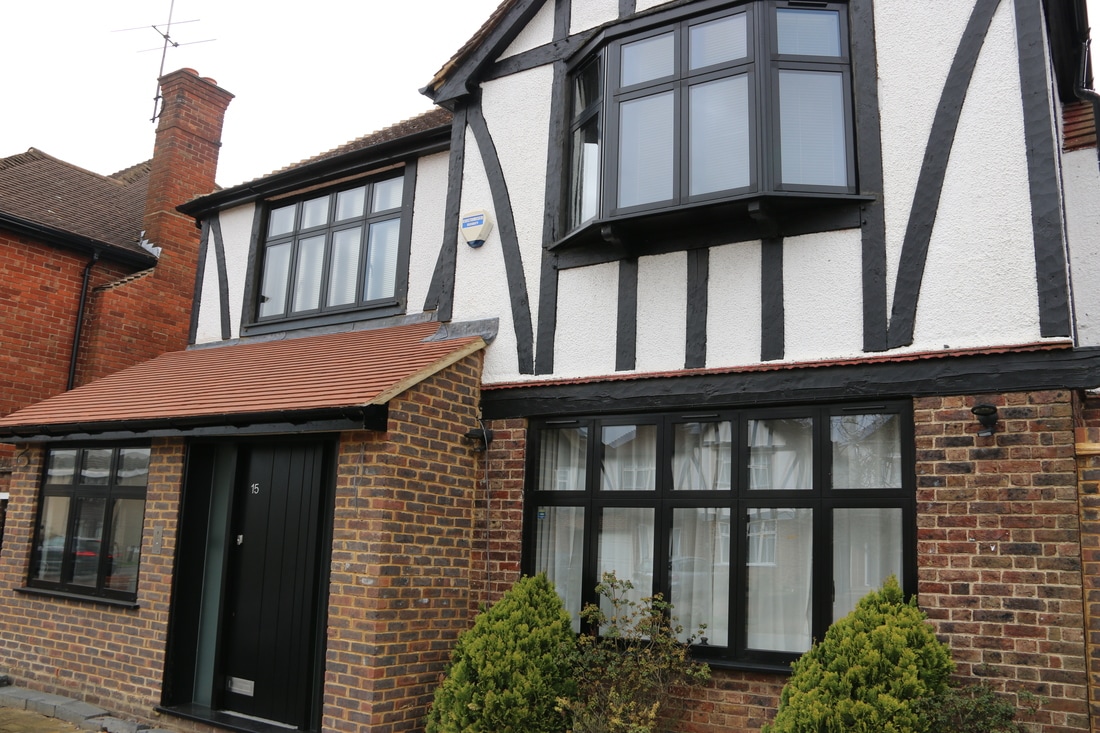
- Red or orange brick: anthracite grey is usually the safe, handsome choice. Pure black can look stark against warm brick on some houses.
- White or pale render: black or anthracite both work, and black gives the strongest contrast.
- Victorian and Edwardian houses: lighter or softer greys, or a dark colour with glazing bars, often sit better than plain dark sheets of glass. Look at what neighbours have done well.
- 1930s homes: slim black or very dark frames with glazing bars echo the steel windows many of these houses originally had.
- Contemporary builds and extensions: almost anything works; jet black or anthracite with large panes gives the cleanest look.
- Doors and roofline: consider front doors, garage doors, gutters and fascias together. Matching the window colour to front doors and patio doors ties the elevation together.
Dark frames absorb more sun than white, so on a large south-facing elevation it is sensible to think about glass choice too. Our guide to energy-rated windows explains the options.
Planning and conservation areas
Changing the colour or style of your windows can matter in a conservation area, on a listed building or where permitted development rights have been removed. Across our area, from the Royal Borough of Windsor and Maidenhead to councils in Buckinghamshire, Surrey, Kent and West Sussex, rules vary, so check with your local planning authority before committing to a big change. Our page on planning permission for replacement windows explains the basics.
Cost of grey and black windows
Our aluminium windows start from £400. Colour itself is rarely the biggest cost factor with aluminium; the main drivers are size, system, glass and opening style. Dual colour, special textures and less common RAL codes can add to the price, and glazing bars add fabrication time. Because we make frames in our own workshop, lead times start from 10 days, and our windows come with a 10-year guarantee. See our aluminium windows cost guide for more detail.
Looking after dark frames
Powder-coated aluminium needs very little care: wash the frames with warm soapy water a few times a year, avoid abrasive pads and solvents, and rinse off any building dust promptly after other work on the house. Dark colours show dust and water marks a little more than white, so a quick wipe after a long dry spell keeps them looking sharp.
See the colours on your own house
Whether you want tilt and turn windows in anthracite, black steel-look casements or grey UPVC, we will talk you through colour choices at a free survey anywhere in Windsor, Maidenhead and the surrounding counties. Call 01753 965 005 or request a free quote.
Frequently asked questions
What is the most popular grey for windows?
Anthracite grey, RAL 7016, is the shade most people mean by grey windows. It is a deep blue-grey that looks nearly black from a distance and works with brick, render and cladding. Lighter greys such as RAL 7039 or 7038 suit some period houses, while RAL 7021 is a darker option close to black.
Should I choose grey or black windows?
Anthracite grey is the safer all-rounder, especially against red or orange brick, where pure black can look stark. Black gives the strongest contrast on white render and contemporary extensions, and suits steel-look designs. Look at samples against your own walls in daylight, and consider your front door, gutters and fascias at the same time.
Can I have grey outside and white inside?
Yes. Dual colour aluminium windows can have one colour facing outside and another inside, for example anthracite grey outside and white inside. This keeps the inside bright, matches existing woodwork and helps if you are renovating in phases. Dual colour can add a little to the cost compared with a single colour throughout.
Can aluminium windows look like Crittall-style steel windows?
They can get close. Slim aluminium frames with glazing bars in black or very dark grey give a similar look with modern thermal performance. Reynaers offers SlimLine 68 heritage profiles, including Ferro, designed to echo traditional steel windows. Genuine steel windows are a separate specialist product, and we will be honest about where aluminium is a convincing match.
Do I need planning permission to change my window colour?
Often not for an ordinary house, but it can matter in a conservation area, on a listed building, on a flat or where permitted development rights have been removed. Rules are set locally, so check with your council's planning team before ordering a noticeable change of colour or style. Our planning permission guide explains the basics.