
Looking for new front doors? The three materials worth comparing are composite, aluminium and UPVC. Composite gives the most traditional look and a solid, heavy feel; aluminium suits contemporary homes and large glazed or oversized doors; UPVC is the lowest-maintenance budget choice. Inspired Glazing surveys, supplies and fits all three from our workshop at Fifield, near Windsor, for homes across Berkshire, Buckinghamshire, Surrey, west Kent and north West Sussex. This guide explains how they differ, which styles and colours work on which houses, what to ask about security and energy, and what happens on fitting day.
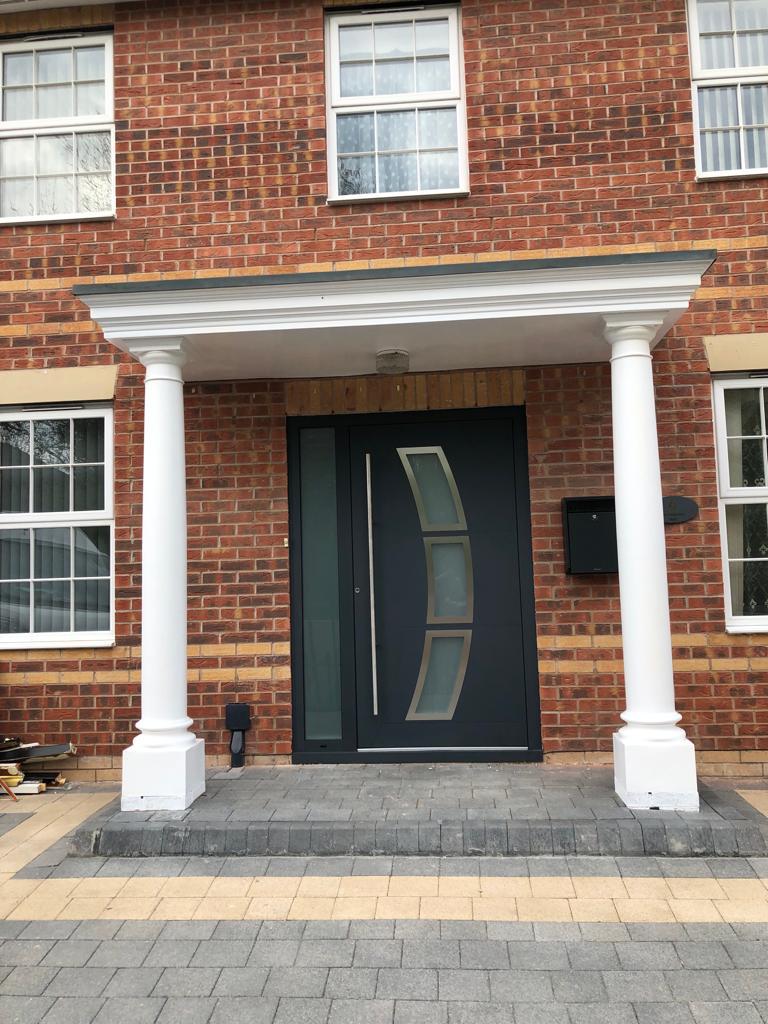
Composite, aluminium or UPVC: which front door material?
All three can be made to measure, double glazed and fitted with modern multi-point locks. The differences are in construction, appearance and how they age.
Composite front doors
A composite door is built in layers: a reinforced frame, an insulating core and a tough outer skin that is moulded and textured to look like painted timber. The result is a thick, weighty slab that closes with a reassuring thud and does not warp or need repainting the way wood does. Composite is the natural choice if you want a classic panelled or cottage look on a Victorian terrace, a 1930s semi or a newer home built in a traditional style. See our composite doors page for the styles and options we offer.
Aluminium front doors
Aluminium is strong for its weight, so it can carry big glass panels, wide leaves and tall pivot-style proportions without sagging. It takes a hard-wearing powder-coated finish in almost any colour and is the material most people choose for flush, handle-led contemporary doors on modern builds, extensions and remodelled houses. Because we fabricate aluminium in our own Fifield workshop, we can match a new front door to aluminium windows and other doors on the same house. Read more on our aluminium windows and doors page.
UPVC front doors
UPVC doors are the most economical option and need little more than a wipe down. Modern profiles come in woodgrain foils and colours as well as white, and they work well where a door needs to match existing UPVC windows. The trade-off is that frames are generally bulkier than aluminium and the door does not have the dense, solid feel of a composite slab. Our UPVC range is covered on the UPVC windows and doors page, and our UPVC window system is Selecta Advance 70.
A quick way to decide
- Period or traditional house, want a solid feel: composite.
- Modern house, lots of glass, or a wide or tall opening: aluminium.
- Tighter budget, matching existing UPVC windows: UPVC.
Front door styles
Style matters more on a front door than on any other part of the house, because it sets the tone for the whole elevation. Broadly, front doors fall into three families.
- Contemporary: flush or near-flush faces, long bar handles, slim vertical glass strips or no glass at all. These suit flat-roofed extensions, new builds and rendered or brick homes that have been modernised.
- Traditional: four- or six-panel designs, glazed top panels, letterplates and knockers in chrome, black or gold-tone. These sit comfortably on Victorian, Edwardian and inter-war houses.
- Cottage: vertical boarded or tongue-and-groove effect faces, often with a small square or arched window near the top. Good for rural homes, period cottages and barn-style properties.
A simple test at survey stage is to look at the windows. Slim, gridless aluminium windows call for a clean contemporary door; sash or Georgian-bar windows call for something panelled. If you are replacing windows at the same time, our guides to sash windows and modern casement windows help you plan the whole frontage together.
Front door colours: black, grey and beyond
Front door colours have moved a long way from white and woodgrain. The two most requested shades today are anthracite grey and black.
- Grey front doors are popular because they work with red brick, buff brick, render and timber cladding alike. Mid and dark greys hide dirt well and pair with chrome or black hardware.
- Black front doors give a smart, formal look on a period terrace and a crisp, graphic look on a modern house. Brass or gold-tone hardware makes a black door feel traditional; black or stainless hardware keeps it minimal.
- Heritage colours such as deep greens, navy, burgundy and muted blues suit older houses and cottages and can add real kerb appeal.
Many front doors can be ordered with one colour outside and another inside, so a bold exterior does not have to dictate your hallway. If you want your windows to match, see our page on grey and black windows. Before you commit, check whether your house is in a conservation area, where the council may have a view on colour as well as style.
Glazing and side panels
Glass changes how a hallway feels. A fully solid door gives the most privacy and insulation; a door with glazed panels lets light into what is often the darkest room in the house. Options include clear, obscure and textured glass, decorative leaded or bevelled designs on traditional doors, and slim vertical glazing on contemporary doors.
Side panels and toplights are worth considering if your hall is dark or the opening is wider than a standard door. They can be fully glazed, part glazed or solid to match the door. Under building regulations, glass in a door, and glass in a side panel within 300mm of the door edge, needs to be safety glass up to 1500mm above floor level, so this is built into any glazed front door we supply.
Front door security: locks and PAS 24
Front door security comes down to the whole doorset, not just the lock. A strong door slab is little use in a weak frame or with poorly fixed hinges. Things to ask about when comparing quotes:
- Multi-point locking: hooks or bolts that engage at several points down the frame when you lift the handle and turn the key.
- Anti-snap cylinders: lock cylinders designed to resist snapping, a common forced-entry method on older euro-cylinder locks.
- PAS 24: a British Standards Institution specification for testing the security of doorsets and windows. Independent test centres attempt forced entry on the frame, locks, hinges and glazing. Certification applies to the tested configuration, so changing the lock or panel layout can take a door outside it.
- Secured by Design: a police-backed initiative that runs its own Police Preferred Specification accreditation and oversees certification schemes such as PAS 24. It does not test products itself.
Approved Document Q, the security part of the building regulations, applies to new homes and to some extensions and conversions rather than straightforward replacements, but PAS 24-tested doors are a sensible benchmark for any home.
Energy efficiency
A draughty front door can make a hallway noticeably colder. In England, a replacement external door must meet a maximum U-value of 1.4 W/m²K under Approved Document L. When comparing doors, ask for the U-value of the complete doorset rather than just the glass, and check the seals and threshold: a well-insulated slab can still leak air if the frame is poorly fitted or the threshold is worn. Our guide to energy-rated windows explains how ratings and U-values work.
What affects the cost of a new front door
We do not publish fixed door prices because every opening is different. The main cost factors are:
- material (UPVC, composite or aluminium);
- overall size, and whether the opening is non-standard;
- side panels and toplights;
- the amount and type of glass;
- colour, especially a different colour on each side;
- hardware and lock upgrades;
- any making good to brickwork, render or internal plaster.
How fitting a front door works
- Survey: we measure the opening, check the condition of the brickwork and threshold, and talk through style, colour, glass and locks.
- Order: your door is made to measure for your opening.
- Removal: on the day, we carefully take out the old door and frame and protect your floors.
- Installation: the new frame is fixed, packed and sealed, the door is hung and adjusted, and hardware is fitted.
- Finishing: we seal inside and out, test the locks and show you how everything works.
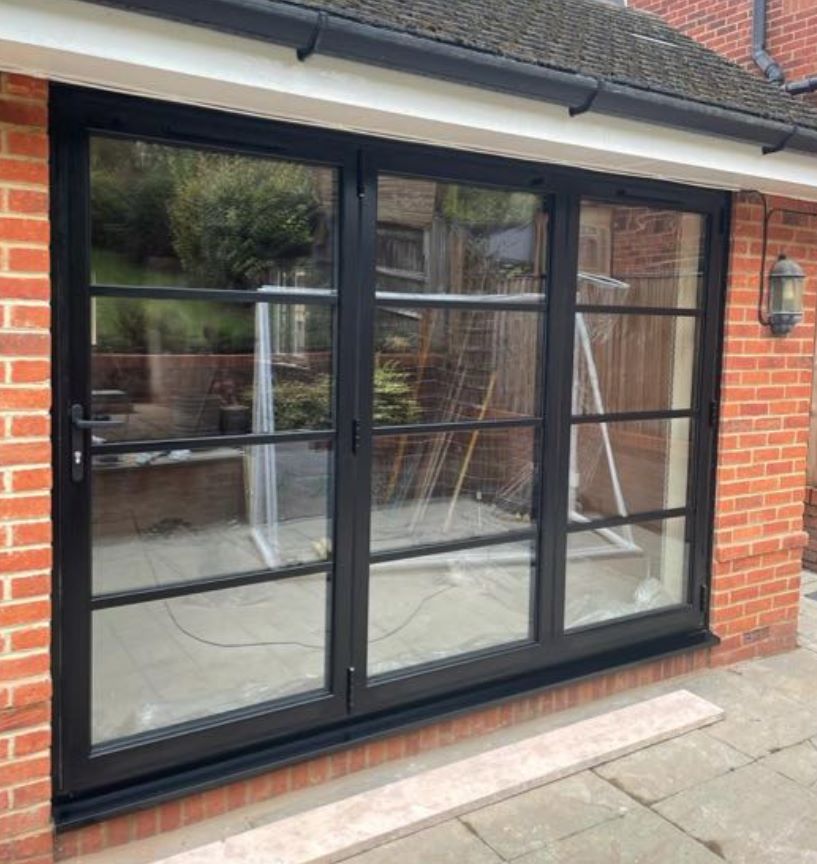
A single front door is usually fitted within a day, so your home is secure the same evening. If you are also thinking about back, French or patio doors, our external doors guide covers the full range.
Book a free survey
Not sure whether composite, aluminium or UPVC suits your home? We will bring samples and talk you through the options. Call us on 01753 965 005, message us on WhatsApp on 07934 152 343, or request a quote online and we will arrange a free survey at a time that suits you.
Frequently asked questions
Which is better, a composite or aluminium front door?
It depends on your house. Composite suits traditional and cottage styles and has a solid, heavy feel with a timber-effect finish. Aluminium suits contemporary homes, large glazed panels and wide or tall openings, and can match aluminium windows. Both can be well insulated and fitted with multi-point locks, so style and budget usually decide it.
What is the most secure type of front door?
Look for a complete doorset tested to PAS 24, with multi-point locking and anti-snap cylinders, rather than judging by material alone. Security depends on the frame, hinges, glazing and lock working together. A well-fitted composite, aluminium or UPVC door can all offer good security when the full doorset has been tested and is installed properly.
Do I need planning permission for a new front door?
Usually not, if the new door looks similar to the existing one on a house. You may need permission or consent if the property is listed, is in a conservation area or is covered by an Article 4 Direction. Flats and leasehold homes may also need landlord approval. Check with your local planning authority before ordering if you are unsure.
Are black and grey front doors a good choice?
Yes. Anthracite grey and black are the two most requested front door colours because they suit brick, render and cladding and hide dirt well. Black looks smart on period houses with brass hardware and graphic on modern homes. Many doors can have a different colour inside, so your hallway can stay light and neutral.
How long does it take to fit a new front door?
A single front door is normally removed and replaced within a day, so your home is secure the same evening. Larger openings with side panels, toplights or brickwork alterations can take longer. We confirm the expected time at survey, once we have checked the opening, the threshold and the condition of the surrounding walls.