
French doors are a pair of hinged glazed doors that open from the middle to give a wide, uninterrupted opening onto a garden, patio or balcony. They suit period homes, smaller openings and anyone who likes the feel of throwing both doors wide open on a summer day. Inspired Glazing makes and fits aluminium and UPVC French doors for homes in Windsor, Maidenhead and across Berkshire, Buckinghamshire, Surrey, west Kent and north West Sussex. Below we explain the options, how French doors compare with patio doors, and what to think about before you order.
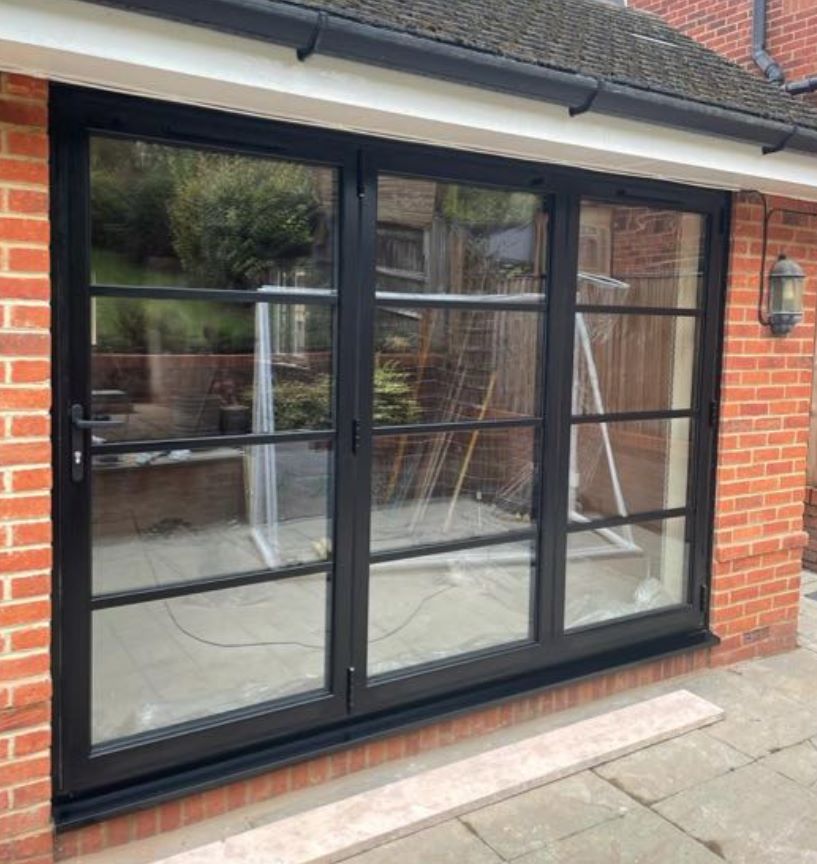
Why choose French doors?
- A full-width opening: with both leaves open, there is nothing in the middle, which makes moving furniture, barbecues and garden tables in and out easy.
- A classic look: the symmetry of a pair of doors suits Victorian, Edwardian, Georgian-style and inter-war houses, as well as modern homes when the frames are slim.
- Good for modest openings: French doors work well in openings that are too narrow for a practical sliding or bifold door.
- Juliet balconies: on upper floors, inward-opening French doors with a glass or metal balustrade let in air and light without a full balcony.
Aluminium French doors
Aluminium is strong enough to support large glass panes with narrow frames, so aluminium French doors let in more light than bulkier frames of the same size. Powder-coated finishes are tough and colourfast, and dual colours, such as anthracite grey outside and white inside, are common. Aluminium is also the natural choice if you already have, or are planning, aluminium windows, because sightlines and colours can be matched exactly. We fabricate aluminium in our own Fifield workshop; see aluminium windows and doors for the wider range, and grey and black windows if you want a dark frame throughout.
UPVC French doors
UPVC French doors are the budget-friendly option. They are low maintenance, insulate well and come in white, colours and woodgrain finishes. They are a sensible choice for a back bedroom, a garden room or a house that already has UPVC windows. Frames are thicker than aluminium, which reduces the glass area slightly. Our UPVC range is on the UPVC windows and doors page, and our UPVC window system is Selecta Advance 70.
French doors with side panels
If your opening is wider than a pair of doors on their own, side panels are the neat solution. Fixed glazed panels either side of the doors widen the view and bring in more light while keeping the doors themselves a manageable size. Side panels can also be made to open, as a narrow hinged vent, for extra ventilation. A toplight above the doors works well in rooms with high ceilings. Because these panels sit beside a door, building regulations require safety glass in any glazing within 300mm of the door edge and up to 1500mm from the floor, as well as in the doors themselves.
Inward or outward opening?
Most garden French doors in the UK open outwards. That keeps the room clear and tends to give a better weather seal, because wind pushes the doors into the frame. Inward opening is used for Juliet balconies and where an outward swing would clash with a step, a narrow path or a raised deck. Think about where the doors will rest when open; outward doors are usually fitted with restrainers or hold-backs so they do not slam in the wind.
Master and slave leaves
On most French doors one leaf, the master, opens first with the handle, while the other, the slave, is held closed by shoot bolts at the top and bottom. Release those bolts and both doors open fully. It is worth deciding at survey which side you want to open day to day, usually the side nearest the path or the kitchen.
French doors vs patio doors
This is the most common decision people weigh up. In short:
- Opening: French doors open the full width with both leaves back. A two-panel sliding patio door only opens about half its width, because one panel slides behind the other.
- Space: French doors need room to swing. Sliding doors take up no floor or patio space.
- Glass and view: sliding doors can use very large panes with fewer frames, which is better for a big view.
- Size: French doors suit openings up to roughly the width of two comfortable door leaves. Beyond that, side panels, sliding or bifold doors make more sense.
- Style: French doors look more traditional; sliding doors look more contemporary.
Our full comparison is on sliding patio doors vs French doors, and our patio doors page covers the sliding option in more detail.
Glass options
Double glazing is standard and suits most homes. You can also choose obscure or textured glass for privacy, solar-control glass for south-facing rooms that overheat, and acoustic glass for houses near busy roads, railways or under flight paths, which is common across parts of Berkshire and Surrey. Georgian bars, either fitted on the glass or between the panes, give a period look. Our double vs triple glazing guide and sound-reducing windows page explain these choices.
Security
A pair of doors has a longer meeting point than a single door, so look at how it is locked. Good French doors use a multi-point lock on the master leaf, shoot bolts on the slave leaf, anti-snap cylinders and hinges that cannot be lifted off from outside. Ask whether the doorset has been tested to PAS 24, the British Standards Institution security specification. Testing covers frame, locks, hinges and glazing together, and certification applies only to the configuration tested.
Energy efficiency
French doors are mostly glass, so the glass and seals do most of the work. In England, replacement doors must achieve a U-value of 1.4 W/m²K or better under Approved Document L. A well-made doorset with modern double glazing will feel noticeably warmer than old single-glazed or early double-glazed doors, and the draught from the meeting stiles disappears.
Planning and building regulations
Swapping old French doors for new ones of similar appearance does not usually need planning permission. Turning a window into a new pair of French doors may need structural work and building control approval, and listed buildings or homes in conservation areas may need consent. Check with your local council and see our guide to planning permission for replacement windows.
What affects the cost
Price depends on material, overall size, side panels or toplights, glass type, colour (especially dual colour), hardware, and whether the opening needs altering. We quote after a free survey rather than guessing from a price list.

Book a free survey
Thinking about French doors, or still deciding between French and sliding doors? We can show you both at survey. Call us on 01753 965 005, message us on WhatsApp on 07934 152 343, or request a quote online and we will arrange a free survey at a time that suits you.
Frequently asked questions
Are French doors or patio doors better?
French doors are better when you want the full width open, a traditional look or have a modest opening. Sliding patio doors are better where space to swing doors is limited, for larger openings and for big uninterrupted glass. A two-panel slider only opens about half its width, while French doors open fully with both leaves back.
Should French doors open inwards or outwards?
Most garden French doors open outwards, which keeps the room clear and helps the weather seal as wind presses the doors into the frame. Inward opening suits Juliet balconies and places where an outward swing would clash with steps, paths or decking. We check the space inside and out at survey before recommending one.
Can French doors have side panels?
Yes. Fixed or opening side panels can be added either side of French doors to fill a wider opening, bring in more light and keep each door leaf a manageable size. A toplight can also go above. Any glass within 300mm of the door edge and up to 1500mm from the floor must be safety glass.
Are aluminium French doors worth the extra over UPVC?
For many homes, yes. Aluminium frames are slimmer, so you get more glass and light, and powder-coated colours are very durable. They also match aluminium windows. UPVC French doors cost less, insulate well and suit homes that already have UPVC windows. The right choice depends on budget, style and the rest of the house.
Are French doors secure?
Modern French doors can be very secure. Look for a multi-point lock on the main leaf, shoot bolts top and bottom on the second leaf, anti-snap cylinders and hinges that cannot be removed from outside. Ask whether the complete doorset has been tested to PAS 24, the British Standards Institution security specification for doors and windows.