
Choosing external doors means matching the right type of door to each opening: a front door for security and kerb appeal, a back door for everyday access, and French, patio, bifold or sliding doors where you want light and a link to the garden. Inspired Glazing supplies and fits made-to-measure external doors in aluminium, UPVC and composite for homes across Berkshire, Buckinghamshire, Surrey, west Kent and north West Sussex, working from our own workshop at Fifield, near Windsor. Use this page to work out which door suits which opening, how to compare them, and whether new doors are worth the investment.
Types of external door
Each door type does a different job. Start with the opening and how you use it, then narrow down the material.
Front doors
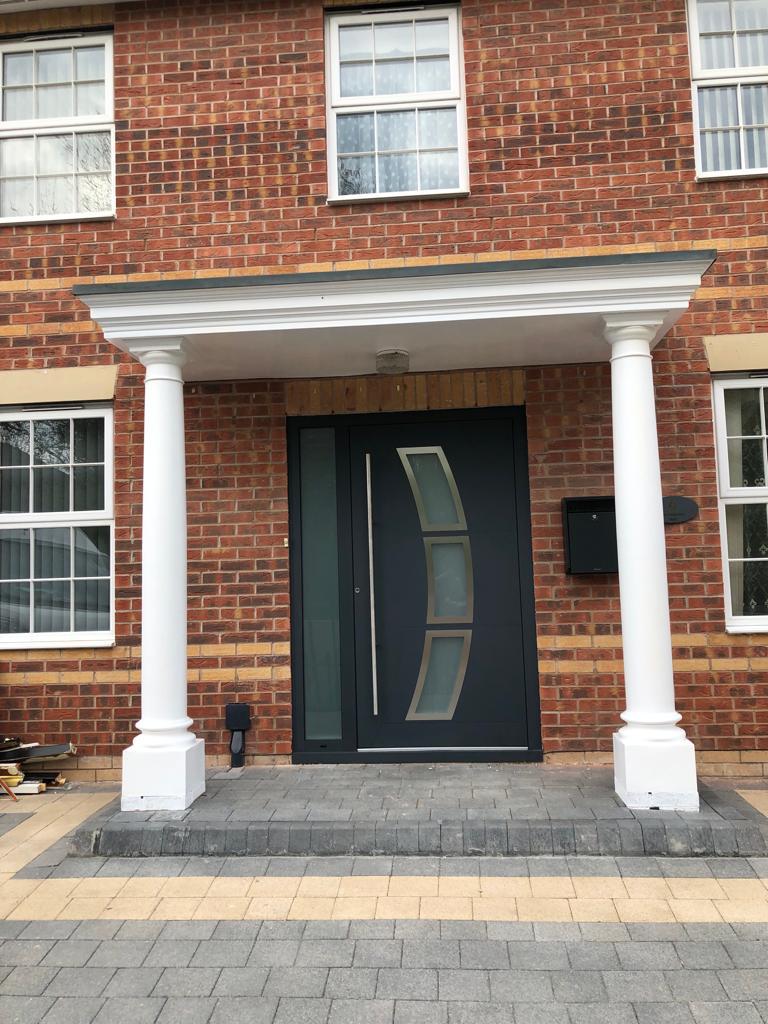
The front door is about security, insulation and first impressions. Composite, aluminium and UPVC are all popular, in contemporary, traditional or cottage styles, with or without side panels. Our front doors guide compares the three in detail, and our composite doors page covers the classic panelled options.
Back and side doors
Back doors, kitchen doors and side doors into utility rooms or garages get heavy daily use, often with muddy boots, pets and bins. A part-glazed composite or UPVC door is a practical, hard-wearing choice here. If you want the top half to open on its own for air or to keep a dog in, a stable-style split door is worth asking about. Back doors deserve the same security as the front, because they are often out of sight from the road.
French doors
French doors are a pair of hinged doors that open outwards or inwards to give a wide opening, ideal for smaller patios, Juliet balconies and period homes. See our French doors page.
Patio and sliding doors
Sliding patio doors run on tracks, so they take up no room when open and allow very large glass panels with slim frames. Our premium sliding door is the Reynaers ConceptPatio 130. See patio doors and Reynaers aluminium sliding doors.
Bifold doors
Bifolds fold back in a concertina to open almost the whole width of a wall, which is great for kitchens and extensions that open onto a terrace. We fit Smart Visofold and Cortizo bifold systems. See aluminium bifold doors, and if you are torn between the two, read bifold vs sliding doors.
How to choose external doors
Work through these questions for each opening and the right answer usually becomes clear.
1. What is the opening for?
An entrance door needs a lock you operate from outside, a letterplate or a separate post box, and possibly a spyhole or a glazed panel for light. A garden door is all about how wide it opens, how much glass it has and how it handles a step down to the patio.
2. How much space is there inside and out?
Hinged doors need clear floor space to swing. If furniture, a kitchen island or a narrow balcony gets in the way, a sliding door is often the better choice. Bifolds need space for the stacked panels when they are open.
3. Which material suits the house?
- Aluminium: slim sightlines, large glass, durable powder-coated colours, and a good match for aluminium windows. Best for modern homes and extensions.
- UPVC: low cost and low maintenance; good where you are matching existing UPVC windows. Our UPVC window system is Selecta Advance 70.
- Composite: the solid, timber-look option for front and back entrance doors on traditional houses.
4. Security
Ask whether the doorset has been tested to PAS 24, the British Standards Institution specification for the security of doors and windows. Tests are carried out on the frame, locks, hinges and glass together, and certification applies to the configuration that was tested. Multi-point locks and anti-snap cylinders should be standard on any entrance door. Secured by Design, the police-backed initiative, runs its own accreditation and oversees schemes such as PAS 24.
5. Energy and comfort
In England a replacement external door must achieve a U-value of 1.4 W/m²K or better under Approved Document L. Ask for the U-value of the whole doorset, and look carefully at seals and thresholds, which is where many older doors leak heat. For doors with a lot of glass, the glass specification matters most; our double vs triple glazing guide explains the trade-offs.
6. Glass safety
Building regulations require safety glass in a door up to 1500mm from the floor, and in side panels within 300mm of a door edge up to the same height. Any glazed door we fit is supplied with safety glass in these zones.
7. Thresholds and access
Low or flush thresholds make life easier with pushchairs, wheelchairs and garden furniture, but they need careful detailing so rain is kept out. We look at the levels inside and out at survey and recommend the right threshold for the location.
Made-to-measure external doors
Very few openings are a perfect standard size, especially in older houses. Every door we supply is made to measure for your opening. Aluminium doors are fabricated in our own Fifield workshop, which means we can match colours and sightlines across a whole project, from a new front door to a wall of sliding glass at the back.
Do new doors add value to your home?
New external doors are rarely the single thing that changes a valuation, but they do help in three practical ways.
- Kerb appeal: the front door is the first thing buyers and agents see. A tired, faded or draughty door makes a house look neglected; a well-chosen new one makes it look cared for.
- Running costs and comfort: better seals and insulation reduce draughts and heat loss, which buyers notice when viewing in winter and when they read the Energy Performance Certificate.
- Living space: replacing a small back door or old patio door with wide French, sliding or bifold doors can transform how a kitchen or living room works, which is often what buyers remember.
Keep the paperwork, such as building regulations certificates and guarantee documents, as conveyancing solicitors will usually ask for them when you sell.
Planning and replacement doors
In most houses, replacing doors with ones of similar appearance does not need planning permission. The exceptions are listed buildings, which need listed building consent for significant work, and homes in conservation areas or covered by an Article 4 Direction, where extra controls can apply. Leaseholders may need their landlord’s approval. Our guide to planning permission for replacement windows covers the same principles, and the safe step is always to check with your local council before ordering.
Where we fit external doors
We cover Windsor, Maidenhead and the wider Berkshire area, plus Buckinghamshire, Surrey, west Kent and north West Sussex. Area pages for Berkshire, Surrey, Kent and Sussex have more local detail, and you can see examples of our work on the case studies page.

Book a free survey
Planning more than one door, or doors and windows together? One survey can cover the whole house. Call us on 01753 965 005, message us on WhatsApp on 07934 152 343, or request a quote online and we will arrange a free survey at a time that suits you.
Frequently asked questions
What is the best material for external doors?
There is no single best material. Aluminium suits large glazed garden doors and modern homes, composite suits traditional front and back entrance doors, and UPVC is the most economical, low-maintenance choice. Many homes use a mix, such as a composite front door with aluminium sliding doors at the back. The opening, style and budget decide it.
Do new external doors add value to a house?
They help rather than transform a valuation. A smart front door improves kerb appeal, better insulation and seals cut draughts and heat loss, and wider garden doors can make a kitchen or living room more appealing to buyers. Keep your installation certificate and guarantee paperwork, as solicitors usually ask for them when you sell.
How do I know if a door is secure?
Ask whether the complete doorset has been tested to PAS 24, the British Standards Institution security specification for doors and windows. Check for multi-point locking and anti-snap cylinders on entrance doors. Certification covers the tested configuration, so it is worth confirming the door you are buying matches it, including the lock and any glazing.
Do replacement external doors need building regulations approval?
Yes. Replacement doors must meet building regulations, including a maximum U-value of 1.4 W/m²K in England and safety glass in critical areas. This is either signed off through a competent person scheme or by applying to building control. Ask your installer which route they use and keep the certificate they provide.
Can you make external doors to fit a non-standard opening?
Yes. Every door we supply is made to measure after a survey of the opening, which is important in older houses where openings are rarely square or a standard size. Aluminium doors are fabricated in our own workshop at Fifield, near Windsor, so we can work to the exact measurements and match colours across the project.