
Quick answer: if you live in a house and your new windows and doors look similar to the existing ones, you usually do not need planning permission. You will need permission or consent if you live in a flat, if your home is a listed building, or if an Article 4 direction covers your street, which is common in some conservation areas. Building Regulations apply in every case, whatever the planning position.
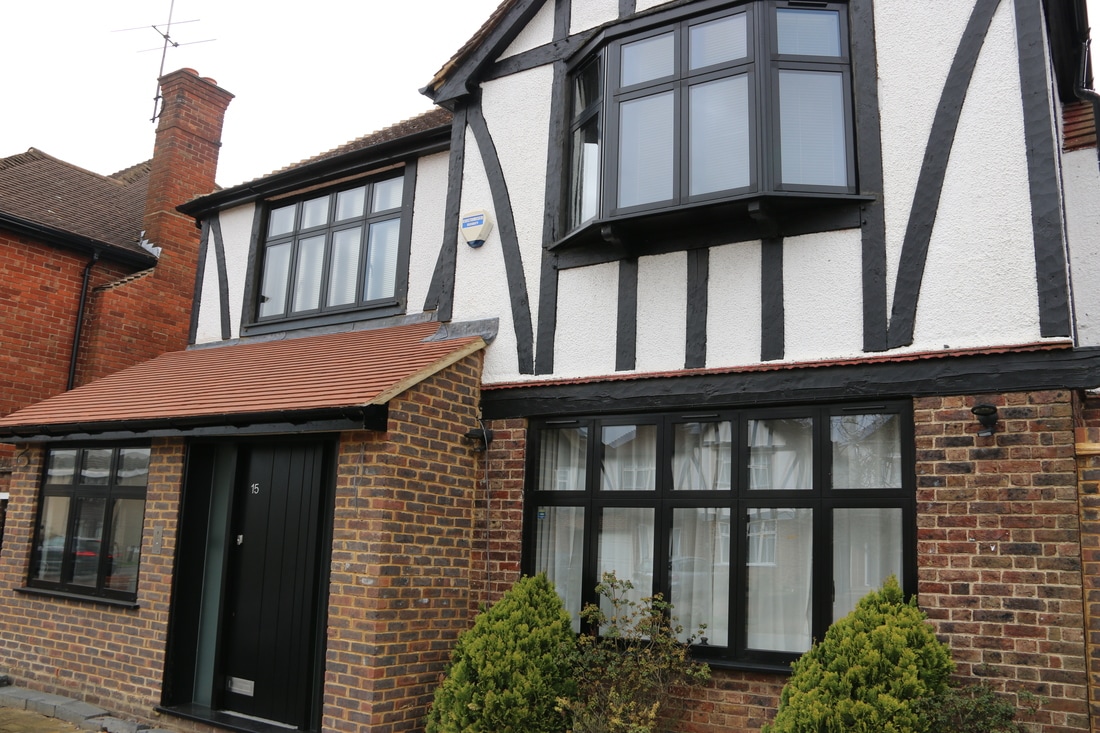
This guide explains the rules in England and what they mean for homes in Surrey, Kent and Sussex. It is general guidance rather than legal advice, so always check with your council if you are unsure.
Houses: replacement windows are usually permitted development
Most window and door replacements on houses fall under “permitted development”, the national rules in the Town and Country Planning (General Permitted Development) (England) Order 2015, Schedule 2, Part 1, Class A (legislation.gov.uk). The key condition is that materials used on the outside must be of a similar appearance to those on the existing house.
According to the government’s Planning Portal:
- Repairs, maintenance and replacement windows and doors of a similar appearance do not normally need planning permission.
- Upper-floor side windows must be obscure-glazed and either non-opening or only opening more than 1.7 metres above the floor of the room.
- A new bay window is treated as an extension and may need permission.
- Internal secondary glazing does not need planning permission.
Changing material, for example from timber to aluminium or UPVC, is a judgement about “similar appearance”. If you want certainty, you can apply to your council for a Lawful Development Certificate, which confirms that the work does not need planning permission.
Flats and maisonettes
Householder permitted development rights only apply to houses. If you live in a flat or maisonette, replacing windows in a way that changes how the building looks, such as a different material, size or style, usually needs planning permission. You will normally also need permission from the freeholder under your lease, because windows are often part of the building’s structure. Check your lease before ordering.
Conservation areas and Article 4 directions
Living in a conservation area does not on its own remove your right to replace windows on a house. What does remove it is an Article 4 direction, which a council can use to bring changes such as windows and doors under planning control. Historic England advises owners to check whether an Article 4 direction applies and to read the conservation area appraisal before choosing new windows (Historic England).
Even where no Article 4 direction applies, many conservation area appraisals set out what the council expects, and some are critical of replacing traditional timber windows with UPVC.
Listed buildings
If your home is listed, you need listed building consent to replace windows or doors in almost every case, inside or out. Carrying out works without consent is a criminal offence under section 9 of the Planning (Listed Buildings and Conservation Areas) Act 1990 (legislation.gov.uk), and the council can require the original to be reinstated. Historic England’s guide Traditional Windows: their care, repair and upgrading explains how councils usually approach repair and upgrading. For many listed homes, a specialist timber joiner is the right choice, and we will tell you honestly if that is the case.
National Landscapes (formerly AONBs)
Large parts of our area sit in the Surrey Hills, Kent Downs and High Weald National Landscapes. National Landscape status restricts some extensions and cladding under permitted development, but it does not by itself remove the right to replace windows like for like on a house. Listed buildings and conservation areas within a National Landscape follow the rules above.
Building Regulations: these always apply
Since April 2002, replacement windows and doors have had to meet Building Regulations (Planning Portal). The main requirements are:
- Energy efficiency (Part L): replacement windows must achieve a U-value of 1.4 W/m²K or better, or a Window Energy Rating of Band B. Glazed doors have similar limits. Updated editions of the Approved Documents published in March 2026 come into force on 24 March 2027.
- Ventilation (Part F): new windows must not make ventilation worse than before. In practice, trickle vents are usually fitted as standard.
- Means of escape (Part B): where an upper-floor window is needed as an escape route, the replacement must still provide a large enough clear opening: at least 0.33 m², at least 450 mm wide and high, and no more than 1,100 mm above the floor.
- Safety glazing (Part K): safety glass is required in critical locations, such as low-level glazing and glass in or next to doors.
FENSA and CERTASS certificates
The simplest way to show your windows meet Building Regulations is to use an installer registered with a Competent Person Scheme such as FENSA or CERTASS. The installer self-certifies the work and you receive a certificate. If you use an installer who is not registered, you need to apply to your council’s building control before the work starts.
When you sell your home, the buyer’s solicitor will ask about any windows replaced since April 2002. If you have lost the certificate, you can order a replacement from the scheme. If the work was never certified, the options are a regularisation application to building control or an indemnity insurance policy.
What the local councils say
Rules on Article 4 directions vary from one conservation area to the next, so check your own address. A few examples from councils we work in:
- Reigate and Banstead: the council says Article 4 directions have been served on most of its conservation areas, so planning permission is generally required to replace windows on houses in those areas (Reigate and Banstead BC).
- Guildford: where an Article 4 direction applies, you need permission to change, add or replace doors and windows. The council’s interactive map shows the areas covered (Guildford BC).
- Sevenoaks: the council’s conservation area design guidance asks that, where replacement is necessary, new windows match the originals in style, opening pattern and detailing (Sevenoaks DC).
- Tunbridge Wells: the borough has 25 conservation areas and publishes its Article 4 directions online (Tunbridge Wells BC).
- Waverley (including Farnham): the council publishes maps for its 44 conservation areas (Waverley BC).
For other councils, use the council’s online planning constraints map or contact the planning team before you order.
Council changes in Surrey, Kent and Sussex
In Surrey, the county and borough councils will be replaced by two new unitary councils, West Surrey and East Surrey, which take over planning on 1 April 2027 (Surrey County Council). West Surrey covers Guildford, Runnymede, Spelthorne, Surrey Heath, Waverley and Woking. East Surrey covers Elmbridge, Epsom and Ewell, Mole Valley, Reigate and Banstead and Tandridge.
Plans to reorganise councils in Kent and Sussex are still being decided. Until any change takes effect, your current district or borough council remains the planning authority.
How we help
At survey, we check whether your property is likely to be affected by a conservation area, Article 4 direction or listing, and we can provide drawings, product data and samples for any planning or listed building consent application. We make sure every installation meets Building Regulations, and every installation comes with a 10-year guarantee.
See our local pages for Surrey, Kent and Sussex, or read our aluminium window price guide. To book a free survey, call 01753 965 005 or request a quote online.
This guide is general information about the rules in England as of October 2026 and is not legal advice. Planning rules and council boundaries change, so always confirm with your local planning authority before starting work.
More products we install
- Front doors
- Composite doors
- French doors
- Patio doors
- Tilt and turn windows
- Grey and black windows
- Sound reducing windows
- Secondary glazing
- Conservatories
- Orangeries
- Porches
- Garage doors
- Fascias, soffits and guttering
- Blinds
- Plantation shutters
Frequently asked questions
Do I need planning permission to replace my windows?
Usually not, if you live in a house and the new windows look similar to the existing ones. This is permitted development under the General Permitted Development Order 2015. You will need permission or consent for flats, listed buildings and homes covered by an Article 4 direction.
Can I change from timber windows to aluminium or UPVC without permission?
On a house without an Article 4 direction, this is often treated as permitted development, but 'similar appearance' is a judgement. A Lawful Development Certificate gives certainty. In flats, Article 4 areas and listed buildings, changing material usually needs planning permission or listed building consent.
Do I need planning permission for new windows in a conservation area?
Not automatically. Conservation area status alone does not remove the right to replace windows on a house. You need permission if an Article 4 direction covers windows. Reigate and Banstead, for example, says most of its conservation areas have one. Always check with your council.
Do I need permission to replace windows in a flat?
Usually yes, if the new windows change the appearance of the building, because householder permitted development rights do not apply to flats. You will normally also need the freeholder's consent under your lease.
What happens if I replace windows in a listed building without consent?
Carrying out works to a listed building without listed building consent is a criminal offence under section 9 of the Planning (Listed Buildings and Conservation Areas) Act 1990. The council can also require the original windows to be reinstated.
Do upstairs side windows have to be obscure glazed?
Yes, to stay within permitted development. Upper-floor windows in a side elevation must be obscure-glazed and either non-opening or only opening more than 1.7 metres above the floor of the room.
Do replacement windows need Building Regulations approval?
Yes. Since April 2002, replacement windows must meet Building Regulations, including a U-value of 1.4 W/m²K or Window Energy Rating Band B. Use an installer registered with a scheme such as FENSA or CERTASS, or apply to your council's building control before work starts.
Do new windows need trickle vents?
Replacement windows must not make a room's ventilation worse than before, under Approved Document F. In practice, trickle vents are usually fitted as standard, especially where the old windows had them.
What if I don't have a FENSA certificate when I sell my house?
If your installer was registered, you can order a replacement certificate from the scheme. If the work was never certified, the options are a regularisation application to your council's building control or an indemnity insurance policy.