
Georgian windows are windows divided into small, evenly proportioned panes by slim glazing bars, the look of houses built roughly between 1714 and 1830. Today you can get that look in a modern double-glazed window in two main ways: bars fixed to the outside and inside faces of the glass (astragal bars), which read like true divided panes, or flat bars sealed inside the glass unit (Georgian bars), which are cheaper and easy to clean but look flatter. Which one is right depends on the house, how close people see it from the street, and whether it is listed or in a conservation area. This page explains the choices in detail; for the window styles themselves, see our sash windows and UPVC windows and doors pages.
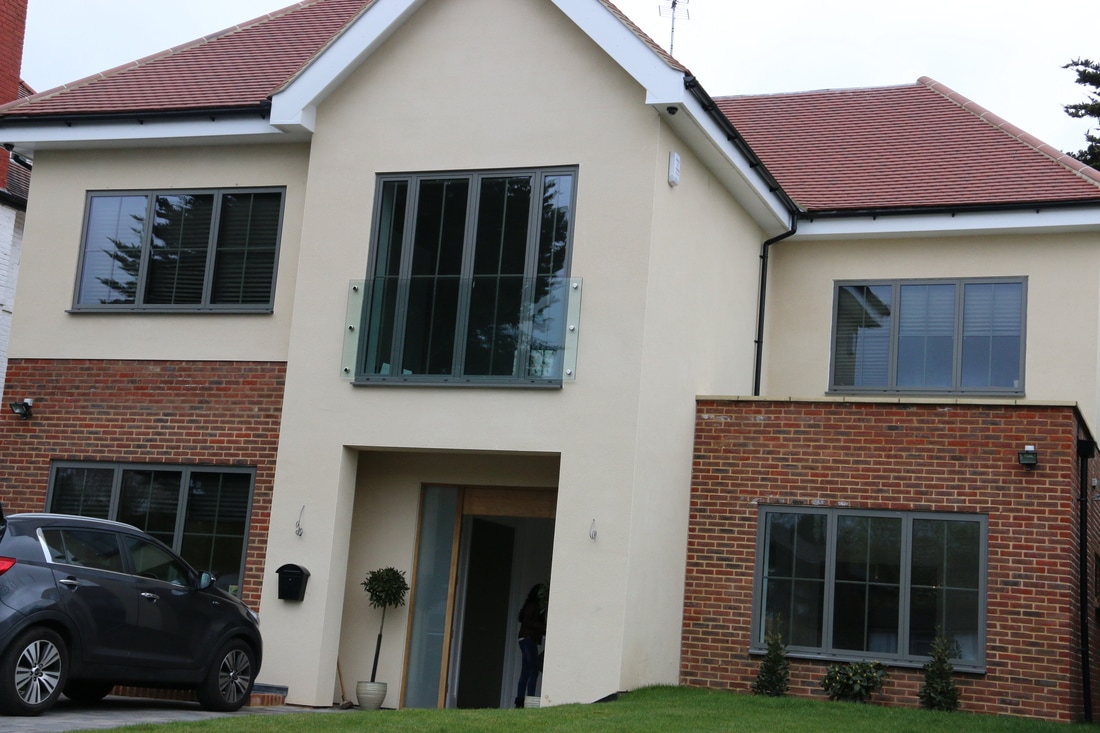
What makes a window look Georgian
The Georgian look is about proportion more than ornament. Historic England’s guidance on traditional windows notes that six-over-six sashes were common in the period but “by no means the rule”, that early 18th-century glazing bars were often thick, and that bars became much thinner as time went on, with some only 12mm wide by around 1820. Panes were usually taller than they were wide, and windows often got smaller on each floor going up the front of the house.
When a replacement window looks “wrong” on a Georgian or Georgian-style house, it is usually one of these details:
- Squat panes. Bars set out to divide the glass into squares, or wider-than-tall panes, rather than the gently vertical rectangle of the originals.
- Heavy frames. Chunky outer frames and sashes that eat into the glass area and make the bars look thin and fussy by comparison.
- Bars that don’t line up. Horizontal bars that sit at different heights in neighbouring windows, or that don’t align between a fixed pane and an opening vent.
- Flat bars seen close up. Internal bars look fine from across the road but obviously sit inside the glass when seen from a front path a metre away.
Astragal bars vs Georgian bars
Astragal (externally bonded) bars
An astragal bar is a moulded profile bonded to the outside face of the glass, usually with a matching bar on the inside and a spacer bar inside the sealed unit lined up behind it. The result is a bar with depth and shadow, so each pane appears separate. This is the option to choose where the windows are seen up close, on the front of a period house, or where a planning or conservation officer wants the windows to look as close as possible to the originals. The bars are applied to a full sealed unit, so the window keeps its thermal performance and is not split into many small units.
Georgian (internal) bars
A Georgian bar is a flat strip set inside the cavity of the double-glazed unit. The glass faces stay completely smooth, so cleaning is quick and there are no external mouldings to weather. It is a sensible, lower-cost choice for side and rear elevations, for new-build homes in a Georgian style, and where the windows sit high up and are mostly seen from a distance. Ask us which bar widths and colours are available for your chosen system and frame colour.
Which should you choose?
A simple rule we use on surveys: if you can touch the window from a public path or front garden, go for astragal bars on the front. If the windows are on upper floors or out of view, internal bars are often perfectly acceptable. Many owners mix the two, with astragal bars on the street elevation and internal bars at the back, to keep the budget sensible.
Getting the proportions right
We set out glazing bars on each window individually rather than applying a standard grid. On a survey we measure the openings, note the existing pane pattern if any originals survive, and check how windows on different floors relate to each other. Points we look at:
- Pane shape. Aim for panes slightly taller than wide, matching the original pattern where it is known.
- Bar width. Choose the slimmest profile the system allows for the size of window; very wide bars on small windows look clumsy.
- Alignment. Line up bars across sashes or vents and across neighbouring windows on the same floor.
- Frame sightlines. Use the slimmest frame option available so the bars are the main feature.
On a sash window the classic pattern is six panes over six. On a casement-style replacement, a fixed pane and opening vent can be arranged so the bars appear to run straight through. Slim aluminium casements such as the Reynaers SL68 suit Georgian-style new-builds and outbuildings that want a crisp, slender line; for traditional sliding sashes see our sash windows page.
Listed buildings and conservation areas
The Planning Portal says new windows of similar appearance usually do not need planning permission, but listed building consent is needed for significant works to a listed building, and conservation areas and Article 4 Directions can bring extra restrictions. On a listed Georgian house, any change to windows needs to be discussed with your council’s conservation officer first. Historic England’s view is that surviving historic windows should be repaired wherever possible, and it notes that in multi-paned windows secondary glazing is generally more thermally efficient than double glazing.
We need to be clear here: we do not make timber windows. Where a conservation officer insists on timber, we are not the right supplier, and our secondary glazing may be the better route to keep the originals and cut draughts. Where the house is not listed and UPVC or aluminium is acceptable, woodgrain-finish UPVC with astragal bars gives a traditional look with low maintenance. Our guide to planning permission for replacement windows covers the wider rules.
Energy performance with glazing bars
Replacement windows in existing homes in England need to meet a U-value of 1.4 W/m²K or Window Energy Rating band B under Approved Document L. Bars do not stop a window reaching this when the glass is a single sealed unit with bars applied or set inside, which is why we do not split windows into many tiny separate units. The same guidance allows some flexibility where a building’s character must be kept, which is a matter for building control and the conservation officer. For more on ratings, see energy rated windows.
Common mistakes to avoid
- Choosing internal bars for a front elevation that is seen from a metre away.
- Copying a pane pattern from a different house rather than the original windows or the street.
- Adding bars to every window, including large rear openings and patio doors, where they block the view and look busy.
- Forgetting that trickle vents, handles and hinge positions all affect how the finished window reads; we plan these at survey stage.
Caring for Georgian-style windows
Internal bars need no extra care. Astragal bars should be cleaned with a soft cloth and mild soapy water, without abrasive pads or pressure washers that could lift the bond at the edges. Check the bars once a year, and contact us if one starts to come away.

Arrange a survey
We fabricate aluminium windows at our Fifield workshop near Windsor and supply UPVC windows on the Selecta Advance 70 system, with aluminium windows from £400, lead times from 10 days and a 10-year guarantee. We cover Berkshire, Buckinghamshire, Surrey, west Kent and north West Sussex. For a free survey and advice on bar layouts for your house, call 01753 965 005 or request a quote online.
Frequently asked questions
What is the difference between astragal bars and Georgian bars?
Astragal bars are moulded profiles bonded to the outside and inside faces of the glass, with a spacer behind them in the unit, so each pane looks separate. Georgian bars are flat strips sealed inside the double-glazed unit, leaving smooth glass on both faces. Astragal bars look more authentic close up; Georgian bars cost less and are easier to clean.
Do Georgian bars make double glazing less efficient?
Not significantly when the window uses one sealed unit with bars applied to it or set inside it. That is how we make Georgian-style windows, and replacement windows still need to meet 1.4 W/m²K or band B under Approved Document L. Splitting a window into many small separate units would perform worse, which is why we avoid it.
Can I fit Georgian-style UPVC windows in a conservation area?
Often yes, but it depends on your council. Windows of similar appearance are usually permitted development, though an Article 4 Direction can remove that right. Check with your local planning authority before ordering. Listed buildings need listed building consent for significant changes, and timber may be required, which we do not make.
How many panes should a Georgian sash window have?
Six over six is the classic pattern, but Historic England notes it was common rather than universal. Smaller upper-floor windows may have fewer panes, and other patterns were used too. The best guide is any surviving original window on your house, or on neighbouring houses in the same terrace or street.
Are astragal bars hard to keep clean?
They need a little more care than flat glass, as dirt can collect at the edge of each bar. Use a soft cloth and mild soapy water, and avoid scourers, solvents or pressure washers that could damage the bond. A wipe along each bar when you clean the glass is usually enough to keep them looking crisp.