
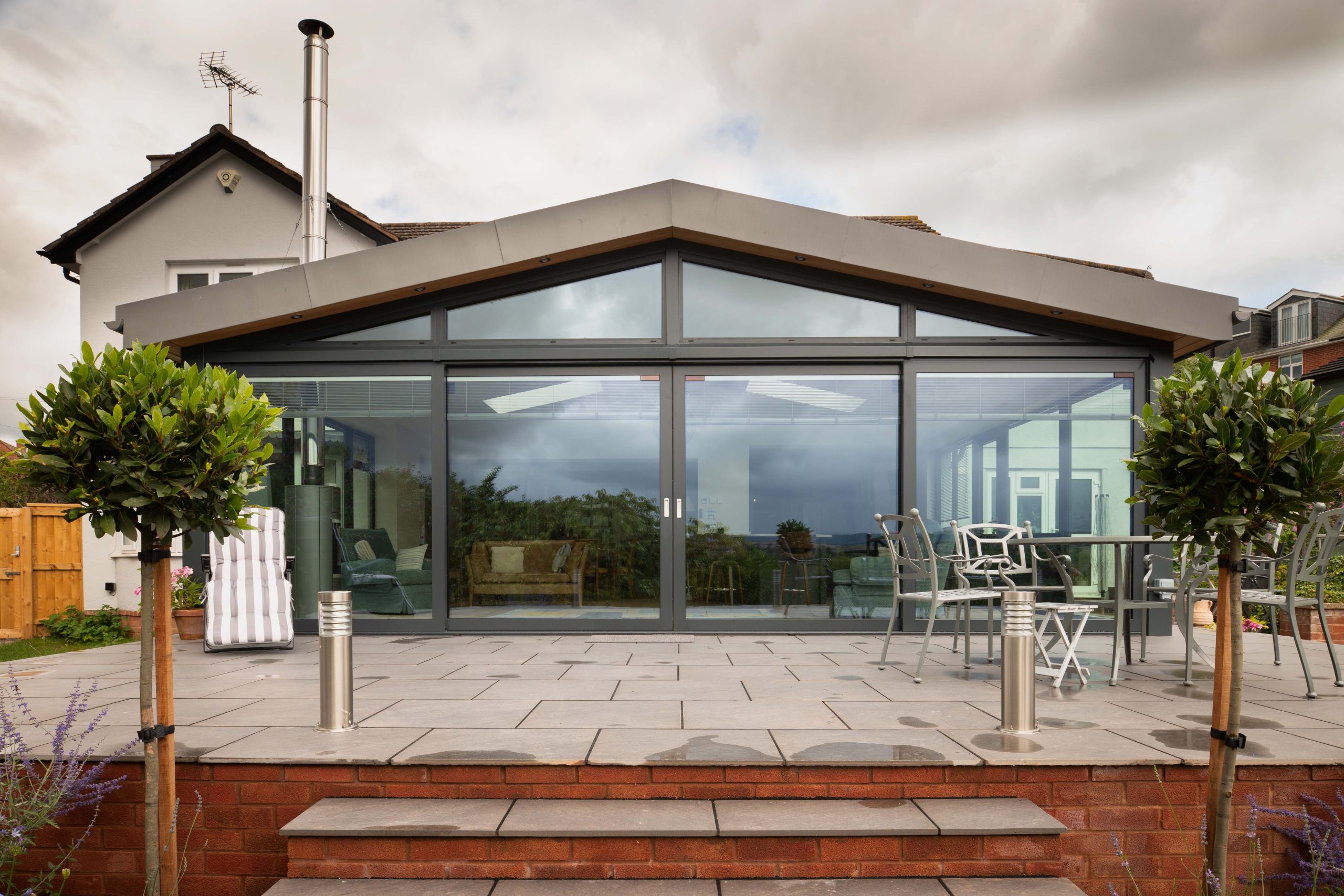
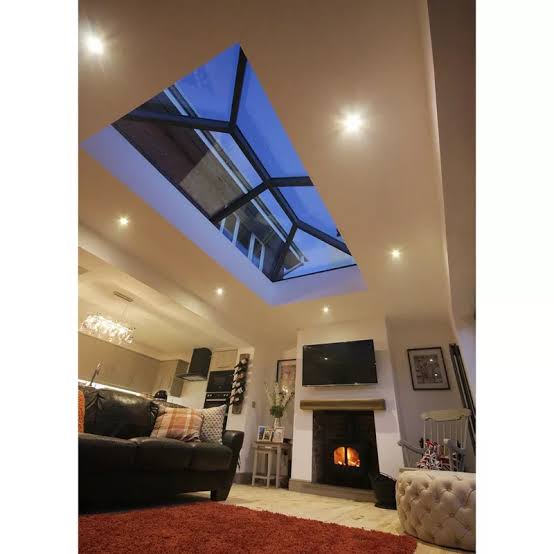
A glass conservatory roof uses sealed double-glazed units, set in a slim roof frame, to give you the most daylight and an open view of the sky. Older glass roofs earned a reputation for overheating, but modern roof glass combines solar-control and low-emissivity coatings that reflect much of the sun’s heat in summer and hold warmth in during winter, with optional self-cleaning outer panes. Because the roof stays translucent, a glass-roofed conservatory can also keep its Building Regulations exemption. This guide explains how heat moves through roof glass, the glass types worth asking for, safety glazing overhead and how to stop the room overheating. For styles and frames, see our main conservatories page.
Why roof glass behaves differently from windows
Glass in a roof works harder than glass in a wall. Ultraframe’s technical article on conservatory glazing explains that roof glass takes in about three times as much solar energy as vertical glass because the sun strikes it more directly, and that a sloped pane typically loses around 30% more heat than the same pane standing upright. Short-wave energy from the sun passes easily through glass, is absorbed by floors and furniture, and is given off again as long-wave heat that glass tends to hold in. That is why an uncoated glass roof bakes in July and feels cold in January.
One practical point: glass U-values are quoted for a vertical pane, so figures on a roof glass specification are comparable with each other but are not what the glass achieves at a shallow pitch.
The glass types worth knowing
Low-emissivity (low-E) glass
A low-E coating reflects long-wave heat back into the room, cutting winter heat loss. The same Ultraframe article notes the trade-off between coating types: soft-coat low-E gives very low U-values but lets in less solar gain, while hard-coat low-E has slightly higher U-values but admits more of the sun’s warmth.
Solar-control glass
Solar-control coatings reflect short-wave solar energy before it enters the room while still letting through useful daylight. The strongest products, which Ultraframe describes as blocking around 80% of solar energy, suit rooms where overheating is the main problem, though they can make the room cooler and dimmer in winter. Ask for two numbers: the g-value, which is the share of solar energy that passes through, and the light transmittance. Lower g-values mean less heat; higher light transmittance means a brighter room.
Body-tinted glass
Blue, bronze, grey or neutral tints absorb some solar energy within the glass itself. They change the colour of the light in the room, so it is worth seeing a sample in daylight before you choose.
Self-cleaning glass
Self-cleaning outer panes carry a coating with photocatalytic and hydrophilic properties. As Pilkington describes its Activ range, organic dirt is broken down by daylight and then washed away by rain. The coating needs both daylight and rain to work, so it helps most on open roofs and less under overhanging trees or eaves. Some products combine self-cleaning with solar control, such as Pilkington’s Activ Blue and Activ Suncool ranges.
Safety glass overhead
Roof glass sits above people’s heads, so the inner pane matters. In January 2026 the Rooflight Association recommended laminated glass as the first choice for the inner pane of overhead glazing, after reported cases of toughened panes shattering spontaneously and falling in clumps. Laminated glass holds together if it breaks. Ask your installer what the inner pane of each roof unit is, and favour laminated.
The wall glazing is covered by safety glazing rules too. Council building control guidance lists critical locations, including glass in doors and side panels and glass within 800mm of floor level, where toughened or laminated safety glass must be used and marked.
Glass roofs and Building Regulations
The Planning Portal says a conservatory is normally exempt if it is under 30 square metres, at ground level, single storey, separated from the house by external-quality walls, doors or windows, heated independently, and its glazing and fixed electrics comply with the Regulations. Building control guidance such as North Norfolk’s defines a conservatory as having a roof at least 75% translucent. A glass roof keeps that character, whereas a solid roof does not; see solid roof conservatories for what changes when you tile.
How to stop a glass roof overheating
- Match the glass to the orientation. South and west-facing rooms need a low g-value; a north-facing room can use glass that admits more winter sun.
- Ventilate. Opening roof vents let hot air escape at the highest point, while opening windows or doors low down draw cooler air in. Cross ventilation clears heat far faster than a single open door.
- Shade the glass. Pleated roof blinds cut glare and some heat; they work best alongside solar-control glass rather than instead of it.
- Keep the house separate. Closing the doors between conservatory and house on hot afternoons stops heat spreading into the rest of the home.
- Consider a mix. If one end of the room gets fierce afternoon sun, a hybrid roof with a solid section over that area may solve it.
Keeping warm in winter
Low-E coatings, gas-filled cavities and warm-edge spacer bars between the panes all reduce heat loss and the cold-down-draught feeling near the glass. Well-insulated side frames help too; our guides to energy-rated windows and double vs triple glazing explain the numbers. Heating must be independent of the house system to keep the exemption.
Swapping polycarbonate for glass
Replacing an old polycarbonate roof with glass is one of the most common upgrades. Glass is heavier than polycarbonate, so the frames and roof structure need checking first, and in many cases a new roof frame designed for glass is fitted. Our page on replacement conservatory roofs covers surveys, timescales and market costs.
Care and maintenance
- Never walk or lean ladders on roof glass; use a long-handled brush and soft water from the ground or a properly supported platform.
- Self-cleaning glass still benefits from a rinse with clean water in dry spells; avoid abrasive cleaners that can damage the coating.
- Clear gutters and any valleys every autumn.
- Look for misting between panes, which means a sealed unit has failed and should be replaced.
Choosing your roof glass
Bring three things to the conversation: which way the room faces, how you want to use it (a bright plant room needs different glass from a home office), and whether trees overhang the roof. With those, we can recommend a glass and explain the g-value and light transmittance in plain terms, so you know what you are buying.
Talk to us about a glass roof
We survey, design and install conservatories across Windsor, Maidenhead, Berkshire, Buckinghamshire, Surrey, west Kent and north West Sussex. Call 01753 965 005 or request a free quote, and we will talk you through the glass options for your room.
Frequently asked questions
What is the best glass for a conservatory roof?
For most rooms, a sealed unit with a solar-control outer pane and a low-E coating, plus a laminated inner pane, gives the best balance of comfort, light and safety. Very sunny south or west-facing rooms suit glass with a low g-value, while north-facing rooms can use glass that lets more winter sun in. Self-cleaning is a useful extra.
Does self-cleaning glass really work on a conservatory roof?
It does, within limits. The coating breaks down organic dirt in daylight, then rain washes it away, so it needs both sun and rain. It works well on open roofs, less well under overhanging trees or eaves, and it does not remove heavy deposits like bird droppings or sap straight away. An occasional rinse in dry spells helps.
Will a glass roof make my conservatory too hot?
Not if it is specified properly. Roof glass takes in far more solar energy than windows, so plain glass overheats. Solar-control coatings, good ventilation through roof vents and opening windows, and blinds keep temperatures manageable. For a room facing strong afternoon sun, a hybrid roof with a solid section is worth considering.
Should the inner pane of a glass conservatory roof be laminated?
We recommend it. In January 2026 the Rooflight Association advised that the inner pane of overhead glazing should be laminated by default, after reports of toughened panes shattering spontaneously. Laminated glass holds together if it breaks, which reduces the risk of glass falling into the room. Ask your installer to confirm the inner pane specification.
Does a glass roof conservatory need Building Regulations approval?
Usually not, if the conservatory is under 30 square metres, single storey and at ground level, separated from the house by external doors or windows, and heated independently. The glazing and any fixed electrics must still comply. A glass roof keeps the conservatory's translucent character, whereas replacing it with a solid roof normally needs approval.