
Windows are no longer white by default. UPVC frames come in a range of coloured and woodgrain finishes applied as a laminated foil, and aluminium frames are powder coated, typically to colours from the RAL Classic chart, which now has 216 shades. You can have one colour outside and another inside, match your front door, or pick a heritage cream or green for a period house. The right colour depends on your walls, roof, surroundings and any conservation area guidance, and it is best judged from real samples in daylight. This page explains the options and how to choose. For the most popular dark shades, see our dedicated grey and black windows page.
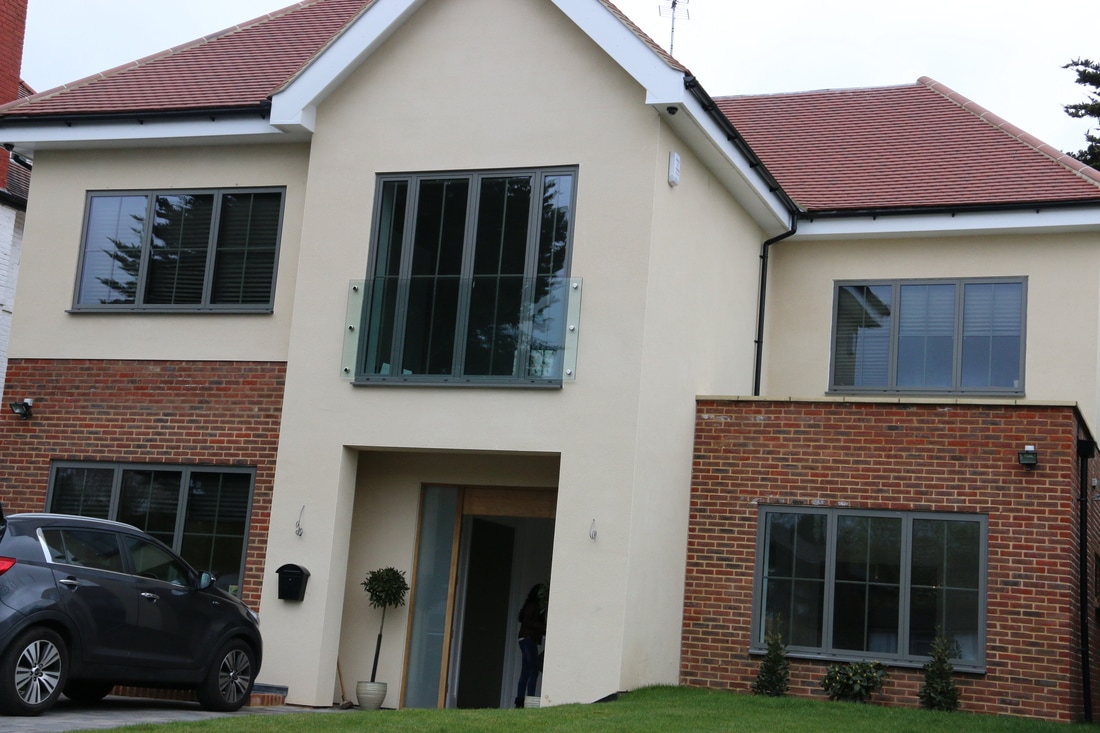
How window colour is applied
UPVC: foils and woodgrains
Coloured UPVC frames are usually made by laminating a coloured or woodgrain foil onto the profile. Woodgrain foils have a textured surface that imitates timber grain, which is a good way to get a traditional look without the upkeep, and a useful alternative where timber would be the period choice. Foils can be applied to the outside only, with white inside, or to both faces. Ask us which colours are available on the Selecta Advance 70 system for your window style.
Aluminium: powder coating
Aluminium is finished by powder coating, which is baked on to form a hard, even finish. Because the colour is applied rather than built into the material, aluminium can usually be coated to a wide range of RAL colours, in matt, satin or textured finishes. Thermally broken aluminium frames can usually take a different colour inside and outside. Ask us and we’ll confirm colour and finish options for your system and sizes. See aluminium windows and doors.
Understanding RAL codes
RAL is a colour standard widely used to specify frame colours. The RAL Classic collection has grown to 216 shades, each with a four-digit code, which makes it easy to match a window to a door, a garage door or roofline. Codes you will often see for windows include RAL 9016 Traffic White, RAL 9010 Pure White, RAL 9001 Cream, RAL 1015 Light Ivory, RAL 6005 Moss Green, RAL 6021 Pale Green and RAL 7016 Anthracite Grey. Colours look different on screen and in print, so always confirm with a physical sample.
Popular window colours
White windows
White remains the most common choice and suits most brick and rendered houses. Not all whites are the same: a bright, cool white can look stark on an old house, while a softer off-white looks gentler against brick or stone. White frames also make small rooms feel brighter from inside.
Cream windows
Cream and ivory shades suit Victorian and Edwardian houses, cottages and homes with warm-toned brick or stone, where they echo traditional painted joinery. See our Victorian windows and cottage windows pages for period detailing.
Green windows
Muted greens, from pale sage to deep moss, are a classic choice for rural cottages and period homes, and they sit well against gardens and planting. Darker greens can work on contemporary homes too.
Woodgrain finishes
Light and dark woodgrain foils give the warmth of timber on UPVC frames. They are popular on cottages, barn-style homes and conservatories.
Grey and black
Anthracite grey and black are popular choices on modern homes and extensions. We cover them in detail on grey and black windows.
Dual colour frames
A dual colour window has one colour outside and another inside, for example anthracite grey outside to suit the house, and white inside to keep rooms bright and match existing décor. It is particularly useful where the inside of the house is decorated in light colours but you want a strong exterior look, and it means you do not have to commit to a dark frame in every room.
How to choose a colour
- Look at the whole house. Roof, brick or render, front door, fascias and guttering all need to work together. See fascias, soffits and guttering.
- Look at the street. In a uniform terrace, a dramatically different colour can jar.
- Check local rules. The Planning Portal notes that listed buildings need consent for significant works and that conservation areas and Article 4 Directions can bring extra restrictions. Some councils publish colour guidance for conservation areas; check with yours.
- Use real samples in daylight. View samples outside, against your walls, at different times of day.
- Think about the inside. A dark frame inside a small room can feel heavy; dual colour solves this.
- Consider sun and size. Dark colours absorb more heat in direct sun. For large frames on sunny elevations, ask us about suitable colours and materials.
For period homes, remember that traditional timber windows were painted, which is why off-whites, creams and muted heritage shades often look more natural than bright white on older houses.
Matching hardware and details
Colour is more than the frame. Handles, hinges, cills, trickle vents, glazing bars and gaskets all affect the finished look. Black or grey gaskets usually suit coloured frames better than white. Plan these details at survey stage so everything matches.
Common mistakes
- Choosing from a screen or a tiny swatch rather than a real sample.
- Matching the window to the front door but ignoring the roofline and garage door.
- Choosing a dark colour inside small rooms without considering dual colour.
- Assuming a colour is fine in a conservation area without checking.
Caring for coloured frames
Wash coloured and woodgrain frames with mild soapy water and a soft cloth a few times a year. Avoid abrasive cleaners, solvents and pressure washers, which can damage foils and powder coatings.

See samples at your survey
We fabricate aluminium windows from £400 at our Fifield workshop near Windsor and supply UPVC windows on the Selecta Advance 70 system, with lead times from 10 days and a 10-year guarantee, across Berkshire, Buckinghamshire, Surrey, west Kent and north West Sussex. Call 01753 965 005 or request a quote and we will bring colour samples to your free survey.
Frequently asked questions
What colours do UPVC windows come in?
Beyond white, UPVC windows are available in a range of coloured and woodgrain foils, typically including greys, black, creams, greens and light and dark woodgrains. The foil can be on the outside only, with white inside, or on both faces. Ask us which colours are available on the system and window style you are considering.
Can aluminium windows be any RAL colour?
Aluminium is powder coated, so it can usually be finished in a wide range of RAL colours and in matt, satin or textured finishes. The RAL Classic chart has 216 shades. Availability can depend on the system and order size, so ask us and we will confirm the colour and finish options for your windows.
What is a dual colour window?
A dual colour window has a different colour on each side, for example anthracite grey outside and white inside. It lets you choose a bold exterior that suits the house while keeping rooms bright and matching your interior. Thermally broken aluminium and foiled UPVC windows can usually be supplied this way.
Which window colour suits a period house?
Off-whites, creams and muted heritage greens often look more natural on Victorian, Edwardian and older homes than bright white, because original windows were painted. Woodgrain foils suit cottages. Check any conservation area guidance from your council, and view real samples against your brickwork or render before deciding.
Do coloured windows fade?
Good-quality foils and powder coatings are designed to resist fading, but all exterior finishes weather slowly over many years, especially on sunny elevations. Regular gentle cleaning with mild soapy water helps keep the colour even. Avoid abrasive cleaners and pressure washers, which can damage the surface of the finish.